
What Causes Fungus Under Toenails?
Fungus under toenails is usually a fungal infection called onychomycosis. It starts when fungi get into a tiny crack between the nail and nail bed, then grow in the warm, damp environment inside shoes. The most common cause is a group of fungi called dermatophytes, which feed on keratin, the protein that makes up nails.
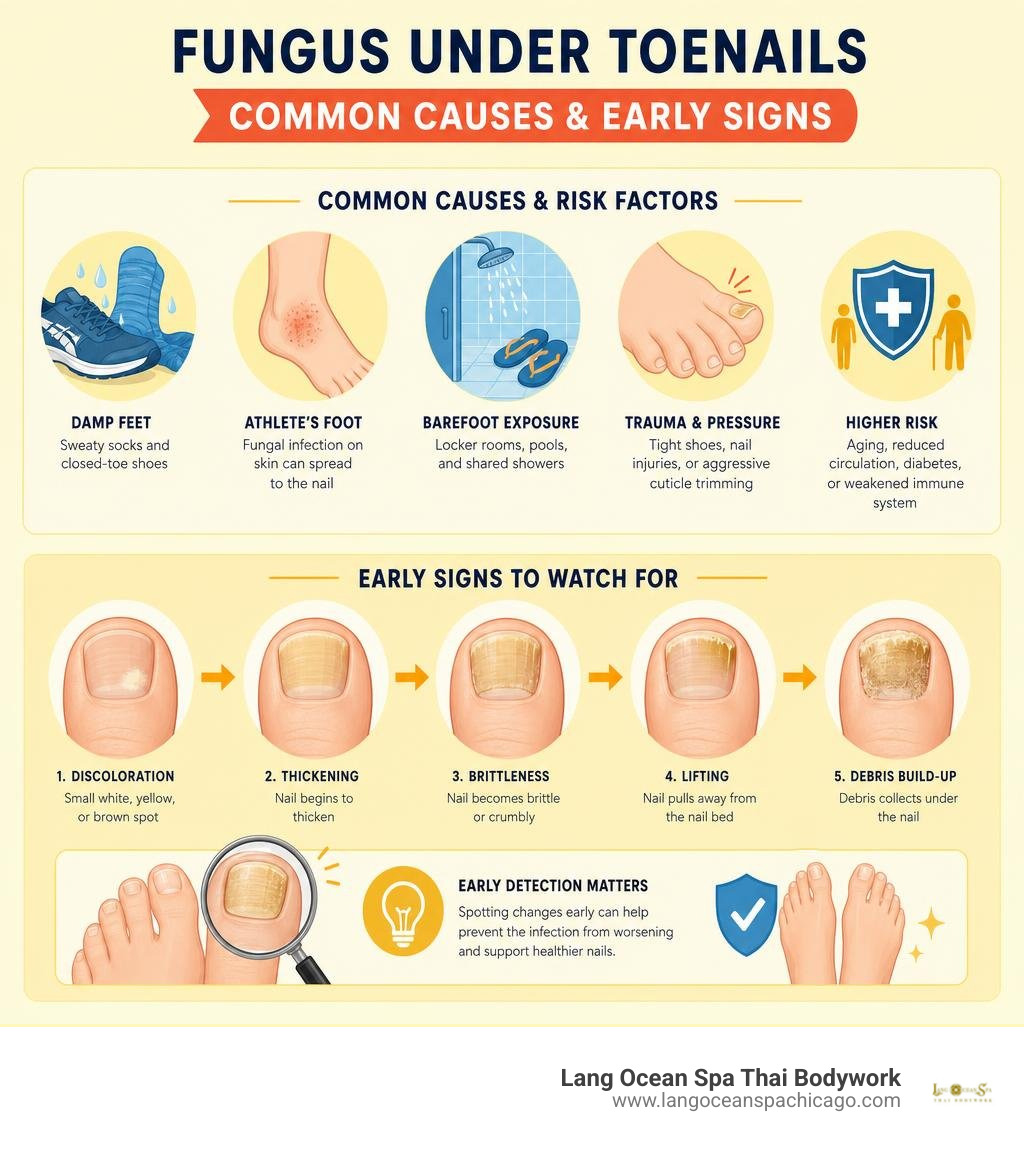
Common triggers include:
- Damp socks or sweaty, closed-toe shoes
- Athlete’s foot spreading from skin to the nail
- Walking barefoot in locker rooms, pools, or shared showers
- Tight shoes, nail injuries, or aggressive cuticle trimming
- Aging, reduced circulation, diabetes, or a weakened immune system
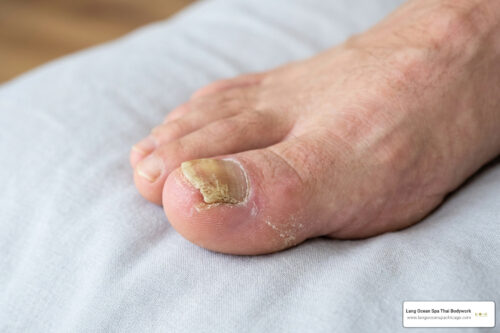
The infection often begins with a small white, yellow, or brown spot. Over time, the nail may thicken, become brittle, lift from the nail bed, or collect debris underneath. Toenails are affected far more often than fingernails, and nail fungus affects roughly 5.5% of adults worldwide.
I am June Liu, founder of Lang Ocean Spa Thai Bodywork in Chicago, where I have supported clients’ overall wellness since 2016. While bodywork does not treat fungus under toenails, I believe practical foot awareness and consistent self-care can help busy professionals notice changes early and protect their comfort.
Primary Causes and Risk Factors of Fungus Under Toenails
Understanding why fungus under toenails develops requires a quick look at the microscopic organisms that invade the foot environment. The primary culprits behind onychomycosis are dermatophytes—specifically Trichophyton rubrum, which accounts for roughly 90% of all toenail fungal infections in the United States. These specialized molds thrive in dark, humid settings and feed directly on keratin, the tough protective protein that forms your nail plate.
Beyond dermatophytes, non-dermatophyte molds (such as Aspergillus, Fusarium, and Scopulariopsis) and yeast species like Candida can also invade the nail tissue. While yeast infections are more frequent in fingernails, they occasionally take root in toenails, especially when the surrounding skin is chronically exposed to moisture or minor trauma.
Why do toenails end up infected ten times more frequently than fingernails? The answer lies in daily environments and physiology. Our feet spend hours enclosed inside dark, sweaty shoes where air flow is limited. Combine heat and sweat with continuous pressure against the toe box, and you get micro-tears in the skin and nail bed that allow microscopic spores to slip inside.
Several key risk factors dramatically increase the likelihood of developing onychomycosis:
- Aging and Slowed Metabolism: While only a small fraction of younger individuals experience nail fungus, statistics show that about 1 in 5 people over age 60 and up to 50% of adults over 70 develop onychomycosis. As we age, nails grow more slowly (normally around 1 millimeter per month), thicken naturally, and blood circulation to the lower extremities decreases, making it harder for the body’s natural defense mechanisms to fight off subungual invaders.
- Impaired Circulation and Peripheral Vascular Disease: Restricted blood flow to the feet deprives local tissues of nutrient-rich oxygen and immune cells, creating an ideal breeding ground for persistent fungal spores.
- Diabetes and Chronic Health Conditions: Individuals living with diabetes face heightened risks due to peripheral neuropathy and diminished arterial circulation. A minor fungal infection can quickly compromise tissue integrity under the nail plate.
- Damp, Non-Breathable Footwear: Synthetic footwear and non-wicking socks trap perspiration against the skin. Over time, the constant moisture breaks down the nail matrix natural barrier, encouraging fungal colonization.
- Micro-Trauma and Mechanical Stress: Activities that cause repeated stubbing or pressure—such as long-distance running, sports, or wearing tight, narrow-toed footwear—separate the nail plate from the underlying nail bed.
For a deeper dive into the biological mechanisms of nail infections, you can review this Clinical overview of onychomycosis etiology and causes.
Contagious Spread and Transmission Pathways
Toenail fungus is undeniably contagious, though it spreads quietly over extended periods rather than instantly. The primary transmission pathways involve direct contact with infected skin scales or contaminated environmental surfaces.
Public wet zones are classic hotspots for acquiring fungal spores. Walking barefoot across damp locker room tiles, communal shower floors, and public swimming pool decks exposes the soles of your feet to microscopic fungi left behind by others.
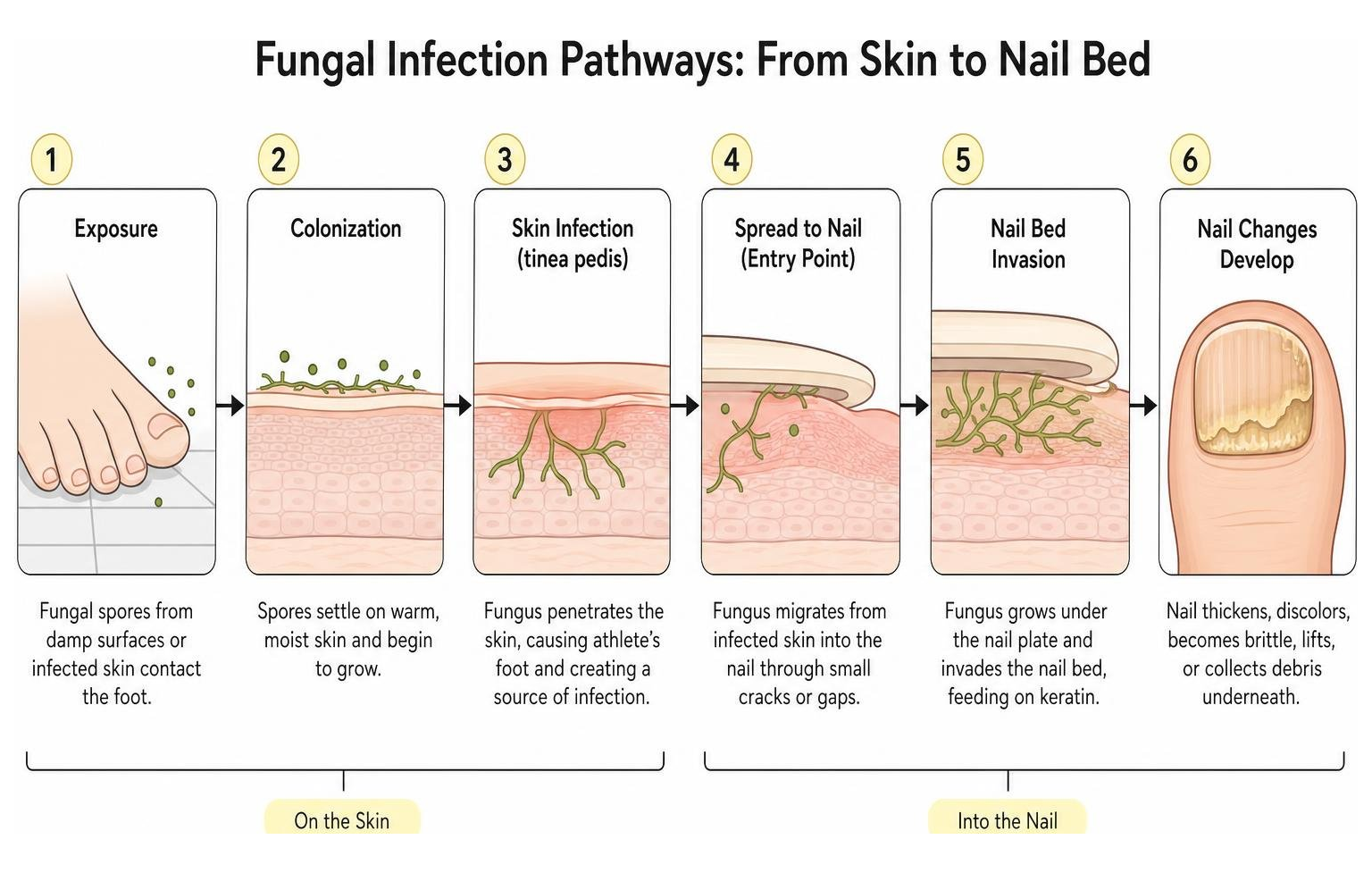
Another common route of transmission occurs directly on your own body through untreated tinea pedis (athlete’s foot). Because the skin of the foot and the toenail unit sit immediately adjacent to each other, a fungal skin infection can easily migrate into the space beneath the toenail plate. Conversely, an established fungal nail can continually re-seed athlete’s foot onto surrounding toes.
Here are the main transmission pathways to guard against in daily life:
- Shared Footwear and Linens: Wearing someone else’s shoes, socks, or sharing bath towels allows fungal spores to transfer from host to host.
- Aggressive Cuticle Trimming and Grooming: The cuticle serves as your body’s natural moisture seal protecting the delicate nail matrix. Scraping, pushing back, or cutting cuticles during a pedicure opens a gateway for pathogens.
- Unsanitary Pedicure Equipment: Using unsterilized nail clippers, non-disposable emery boards, or improperly disinfected foot basins can carry fungal spores between patrons.
To prevent self-transmission when getting dressed in the morning, a clever hygiene tip is to put your socks on before your underwear or pants. This simple habit prevents spores on your feet from clinging to pant legs and transferring to the groin area, where they can cause jock itch (tinea cruris).
Identifying Symptoms and Diagnostic Methods
Recognizing a fungal infection early can save months of frustration down the road. However, identifying fungus under toenails by sight alone can be tricky, because nearly 50% of all discolored or distorted toenails stem from non-fungal conditions such as psoriasis, mechanical trauma, lichen planus, or bacterial contamination.
When onychomycosis takes hold, it alters the structural architecture, color, and texture of the nail unit in distinct ways:
- Discoloration: The nail plate often turns white, pale yellow, or dark brown. In white superficial onychomycosis, soft chalky white patches appear directly on the surface of the nail plate. Bacterial infections, by contrast, tend to leave behind green or black marks.
- Nail Thickening (Hyperkeratosis): The nail becomes unnaturally thick, hard to trim, and difficult to manage with standard home clippers.
- Crumbling and Brittle Texture: The edges of the nail become fragile, flaking off easily or cracking along the sides.
- Subungual Debris Accumulation: Soft, keratinous debris builds up directly underneath the nail bed, lifting the nail plate off the underlying skin (onycholysis).
- Foul Odor: As keratin breaks down under the airtight nail plate, a distinct, unpleasant odor may emerge when trimming or cleaning beneath the nail.
Because conditions like nail psoriasis mimic onychomycosis almost identically, professional medical diagnosis relies on objective laboratory testing before launching long-term treatment regimens. A podiatrist or dermatologist will often gently scrape debris from under the nail or clip a portion of the dystrophic plate to perform specific diagnostic tests:
- Potassium Hydroxide (KOH) Wet Mount: A quick in-office microscopic examination where KOH dissolves human keratin, leaving fungal hyphae clearly visible under a microscope (sensitivity around 60%).
- PAS (Periodic Acid-Schiff) Stain Biopsy: A highly sensitive lab test (up to 95% accuracy) where a nail clipping is stained to highlight fungal cell walls within the keratin layers.
- Fungal Culture and PCR Testing: Polymerase Chain Reaction (PCR) testing and traditional cultures identify the exact species of fungus, helping clinicians choose targeted antifungal therapies.
You can learn more about how medical providers evaluate nail changes by reviewing these Detailed diagnostic procedures for nail fungus.
Early Symptoms of Fungus Under Toenails
Catching an infection during its initial stages yields far better outcomes than attempting to clear severe, total-nail dystrophy later on. The earliest warning signs are subtle and easy to miss if you aren’t paying close attention:
- A tiny, pinpoint white spot or pale yellow streak beneath the tip or side edge of the toenail.
- Slight loss of normal nail shine, making a portion of the nail look dull or matte.
- Minor brittleness along the free edge of the big or pinky toenail.
- Slight thickening near the distal edge that makes filing feel uneven.
When you notice these early signals, immediate action—such as filing down the area gently, keeping the foot strictly dry, and applying over-the-counter topical agents—can prevent fungal spores from establishing deep roots in the nail matrix.
Clinical Treatments and Medical Solutions
Treating fungus under toenails requires patience and consistency. Because toenails grow at a slow pace of approximately 1 millimeter per month, completely eliminating an infection often takes anywhere from 4 to 12 months, with full clear nail regrowth requiring up to 18 months.
Modern medicine approaches onychomycosis through topical lacquers, systemic oral medications, mechanical debridement, and advanced procedural options.
- Oral Antifungal Medications: Systemic prescription pills represent the most potent clinical treatment for moderate to severe cases. Terbinafine is the gold-standard oral option, offering a mycological cure rate of roughly 76% after a daily 12-week pulse or continuous course. Itraconazole and fluconazole are common alternatives. Because oral antifungals are metabolized through the liver, physicians typically perform baseline blood tests to check liver function before and during treatment. Oral medications remain active inside the nail tissue for months after the prescription regimen ends.
- Prescription Topical Lacquers and Creams: For mild-to-moderate infections that haven’t reached the nail matrix, topical agents like efinaconazole, tavaborole, and ciclopirox medicated lacquer are applied directly to the nail plate. Ciclopirox, for example, is applied daily for seven days before being wiped clean with alcohol and reapplied. Topicals carry virtually no systemic side effect risks, but their mycological cure rates are lower (ranging between 36% and 55%) because liquid must penetrate the dense keratin barrier.
- Mechanical Clinical Debridement: Podiatrists use specialized rotary burrs or clipping tools to carefully pare down thickened hyperkeratotic nails. Thinning the nail plate reduces painful shoe pressure and allows topical antifungal solutions to penetrate deeper into the underlying infection.
- Laser Therapy and Chemical Nail Avulsion: FDA-cleared laser treatments direct light energy through the nail plate to heat and destroy fungal pathogens. While laser treatments can improve nail clarity in a few sessions, research is ongoing regarding long-term cure rates. In severe, painful, or treatment-resistant cases, chemical urea pastes or minor surgical procedures can remove the infected nail plate entirely, allowing topical agents to be applied straight to the exposed nail bed.
For a comprehensive breakdown of clinical pathways and medical options, read this Overview of onychomycosis treatments and outcomes.
Effective Home Remedies for Fungus Under Toenails
If your infection is in its very early stages or you are looking for complementary strategies alongside standard care, several low-risk home remedies have shown promise:
- Tea Tree Oil (Melaleuca alternifolia): Known for its natural antifungal and antiseptic properties, applying one to two drops of pure tea tree oil directly to clean, dry nails twice daily can help manage surface fungal growth over time.
- Diluted Vinegar Soaks: Acetic acid creates an acidic environment that inhibits fungal proliferation. Mix 1 part white or apple cider vinegar with 2 parts warm water and soak your feet for 15 to 20 minutes daily. Ensure you dry your feet completely afterward.
- Baking Soda Paste: In laboratory settings, baking soda (sodium bicarbonate) has been shown to prevent fungal growth in up to 79% of tested specimens. Create a thick paste using baking soda and warm water, apply it directly to the affected nail for 10 minutes, then rinse and dry thoroughly.
- Over-the-Counter (OTC) Antifungal Creams and Sprays: Products containing active ingredients such as tolnaftate, clotrimazole, or terbinafine can be applied to surrounding skin and nails daily. Thinning the nail plate slightly with a gentle nail file or urea-based lotion prior to application helps the OTC medication absorb better.
- Proper Trimming Technique: Trim your toenails straight across using clean, disinfected clippers, and avoid rounding the corners too deep into the nail folds. File down any sharp edges gently.
Preventive Foot Hygiene and Long-Term Protection
Because toenail fungus has a frustratingly high recurrence rate—reaching up to 40% even after successful clinical treatment—building proactive daily foot hygiene habits is your best defense against reinfection.
Here is a practical daily checklist to keep your feet healthy, clear, and comfortable:
- Keep Feet Clean and Completely Dry: Wash your feet daily with soap and warm water. Take extra care to dry thoroughly between your toes, as trapped moisture creates prime conditions for fungal growth.
- Choose Moisture-Wicking Socks: Swap traditional 100% cotton socks for synthetic wicking blends (such as polypropylene, acrylic, or coolmax) or moisture-wicking wool. Synthetic fibers pull perspiration away from the skin significantly faster than cotton. Change your socks during the day if your feet become sweaty.
- Wear Breathable, Well-Fitting Footwear: Avoid tight, narrow shoes that squeeze the toe box and cause mechanical stress against the nail beds. Rotate your shoes daily so each pair has at least 24 hours to air out completely.
- Use Shower Shoes in Wet Public Areas: Always wear flip-flops, thongs, or protective water shoes when walking around public pool decks, health club locker rooms, spa showers, and hotel room carpets.
- Sanitize Grooming Tools and Disinfect Shoes: Clean and sanitize nail clippers, files, and personal pedicure tools with 70% isopropyl alcohol before and after every use. Spray the inside of your worn shoes with an antifungal spray or treat them with ultraviolet shoe sanitizers to eliminate lingering fungal spores.
- Practice Pedicure Safety: When visiting commercial nail salons, verify that technicians use hospital-grade sterilization equipment (autoclaves) for metallic tools and fresh disposable tub liners for foot baths. Most importantly, ask your technician not to cut or aggressively push back your cuticles.
- Treat Athlete’s Foot Immediately: Never ignore itching, scaling, or peeling skin between your toes. Treating skin fungus with topical antifungal creams right away prevents fungal spores from invading your nail plates.
For further evidence-based tips on keeping your feet clear of infection, explore these Comprehensive guidelines on fungal nail infection prevention.
Frequently Asked Questions About Toenail Fungus
Can toenail fungus go away on its own without treatment?
No, toenail fungus rarely, if ever, resolves on its own. Because fungal organisms embed themselves deep within the keratin structure of the nail plate and underlying bed, the body’s natural defenses cannot easily clear the pathogens without assistance. Left untreated, onychomycosis is typically a chronic, progressive condition that steadily deepens, turning the nail increasingly thick, discolored, and brittle over time. Early intervention is key to stopping the cycle before structural damage becomes severe.
What complications arise if onychomycosis is left untreated?
Ignoring a fungal nail infection can lead to several noticeable complications beyond cosmetic embarrassment:
- Permanent Nail Bed Distortion: Chronic infection causes long-term scarring of the nail matrix and bed, leading to permanent nail dystrophy even after the active fungus is cured.
- Pain and Walking Difficulty: Severely thickened nails exert uncomfortable pressure against shoe tops, causing pain during walking, exercising, or standing.
- Secondary Bacterial Infections: As the nail lifts and cracks the surrounding skin, bacteria can enter, giving rise to acute skin infections like paronychia or spreading lower-extremity cellulitis.
- Heightened Risks for Diabetic Patients: For individuals living with diabetes, poor circulation, or neuropathy, a neglected fungal nail can cause micro-ulcerations underneath the nail plate, potentially leading to foot ulcers and severe tissue complications.
How long does it take for a healthy nail to grow back completely?
Because toenails grow at a slow rate of roughly 1 millimeter per month (and even slower in older adults or those with impaired circulation), complete regrowth of a clear, healthy toenail typically takes 12 to 18 months.
Even after successful medical treatment eliminates active fungal spores (achieving a mycological cure), you must wait for the old, damaged nail tissue to gradually grow out and be trimmed away. Adhering strictly to your preventative hygiene habits throughout this entire regrowth period is critical to prevent new fungal spores from settling into the fresh nail growth.
Conclusion

Dealing with fungus under toenails requires a clear understanding of its causes, an accurate diagnosis, and a healthy dose of patience. By learning how dermatophytes thrive in damp footwear and public spaces, you can take simple, proactive steps—like wearing wicking socks, using shower shoes in shared facilities, protecting your cuticles, and acting quickly at the first sign of discoloration—to keep your feet looking and feeling their best.
At Lang Ocean Spa Thai Bodywork, we care deeply about your overall wellness, comfort, and daily relaxation. While our licensed therapists focus on traditional Thai massage, full-body bodywork, and restorative foot wellness rather than medical treatments, we believe that regular self-care goes hand in hand with mindful foot hygiene. Taking time out of your busy schedule to unburden your body, relieve foot tension, and rest your spirits is an essential part of an active, healthy lifestyle.
If you are located in Chicago—whether in River North, Lincoln Park, or Streeterville—and want to unwind after a long week on your feet, we invite you to experience our authentic, tranquil bodywork sessions. Explore our relaxing bodywork and foot care services today to reserve your affordable, restorative getaway.