Find Local Thai Foot Massage for Tired Feet and Lower-Leg Tension
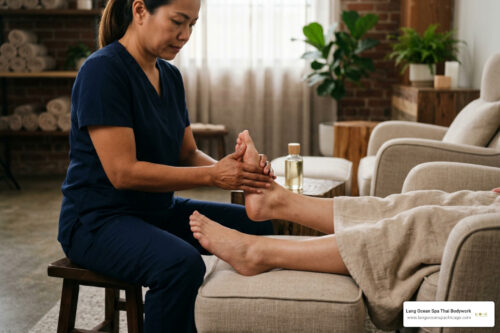
A Thai foot massage is a focused treatment for the feet, ankles, calves, and lower legs. It combines rhythmic hand pressure, gentle stretching, and reflex-point work to help ease the heavy, tight feeling that can build up after long workdays, commuting, standing, or exercise.
When choosing a local session, look for a trained therapist who will:
- Ask about injuries, health conditions, and preferred pressure.
- Work beyond the soles, including the ankles and calves.
- Adjust pressure if an area feels too tender or painful.
- Use hands, thumbs, and sometimes a smooth wooden stick for precise pressure points.
Thai foot massage is not a substitute for medical care. But it can be a practical way to slow down, relax tense lower legs, and give overworked feet dedicated attention. Research has also found short-term improvements in balance, foot sensation, and ankle mobility among people with diabetic peripheral neuropathy after a supervised two-week program.
I am June Liu, founder of Lang Ocean Spa Thai Bodywork in Chicago, and I have helped clients restore balance and reduce stress through personalized Thai foot massage and bodywork since 2016. In this guide, I will explain what happens during a session, what the evidence supports, and how to decide whether it is right for you.
What Is a Thai Foot Massage and How Does It Work?
At its core, a Thai foot massage is a dynamic, holistic bodywork therapy that addresses the lower extremities—from the toes all the way up over the knees. Unlike standard Western treatments that focus exclusively on rubbing the soft tissue of the arches, this modality treats the feet and lower legs as an integrated system connected to the whole body. We practice traditional Thai foot massage: ancient reflexology for modern sole relief to balance the physical muscular structure and the subtle energy pathways of the body.
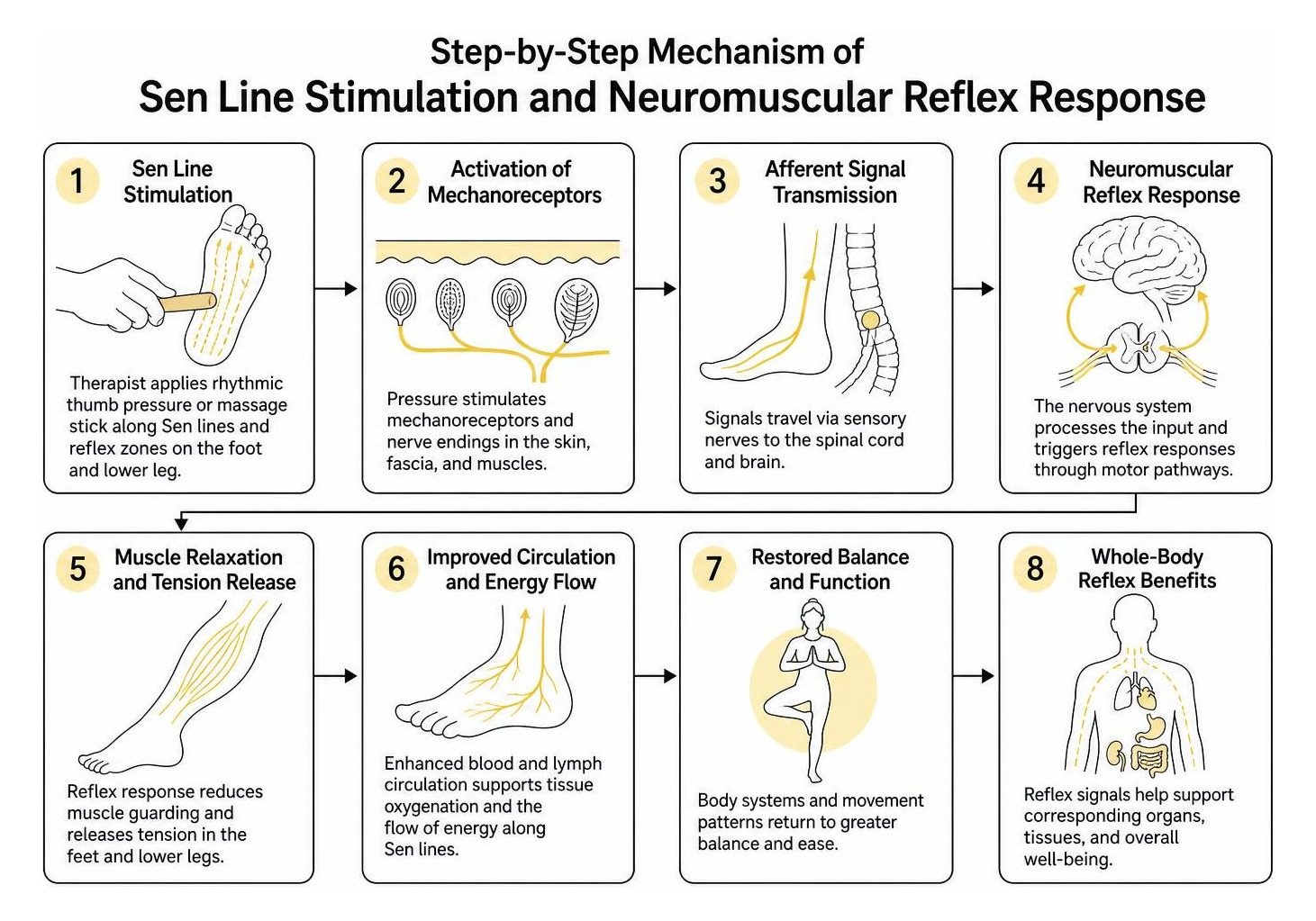
The therapy works through a systematic blend of rhythmic compression, passive joint articulation, targeted acupressure, and muscle stretching. By working the energetic channels alongside the physical musculature, therapists relieve localized tension in the feet while sending restorative reflex signals through the nervous system to corresponding organs, glands, and tissues.
Origins and the 2,000-Year Monastic Tradition
The roots of Thai foot therapy stretch back more than 2,000 years. Steeped in the rich heritage of traditional Thai medicine, the practice was originally developed and preserved by Buddhist monks within the sacred temple grounds of Thailand, such as Wat Pho.
Historically, healing arts in Southeast Asia evolved at the crossroads of cultural exchange. Thai bodywork synthesized the energetic principles of Indian Ayurvedic medicine—introduced alongside Buddhism by figures like Jivaka Kumar Bhaccha—with traditional Chinese medicine, particularly reflexology and meridian theory. This lineage has been documented extensively in classic texts and modern training manuals, such as this THAI FOOT MASSAGE guide. Over centuries, these techniques were refined into a distinct discipline designed to keep monks healthy, limber, and grounded during extensive periods of meditation and daily service.
Sen Lines and Acupressure Reflex Zones
Central to the philosophy of Thai bodywork is the concept of Sen lines—energy channels that traverse the human body. Traditional Thai medicine identifies ten primary pathways (Sen Sib) originating around the navel and terminating at the extremities, including the soles of the feet, fingertips, and head.
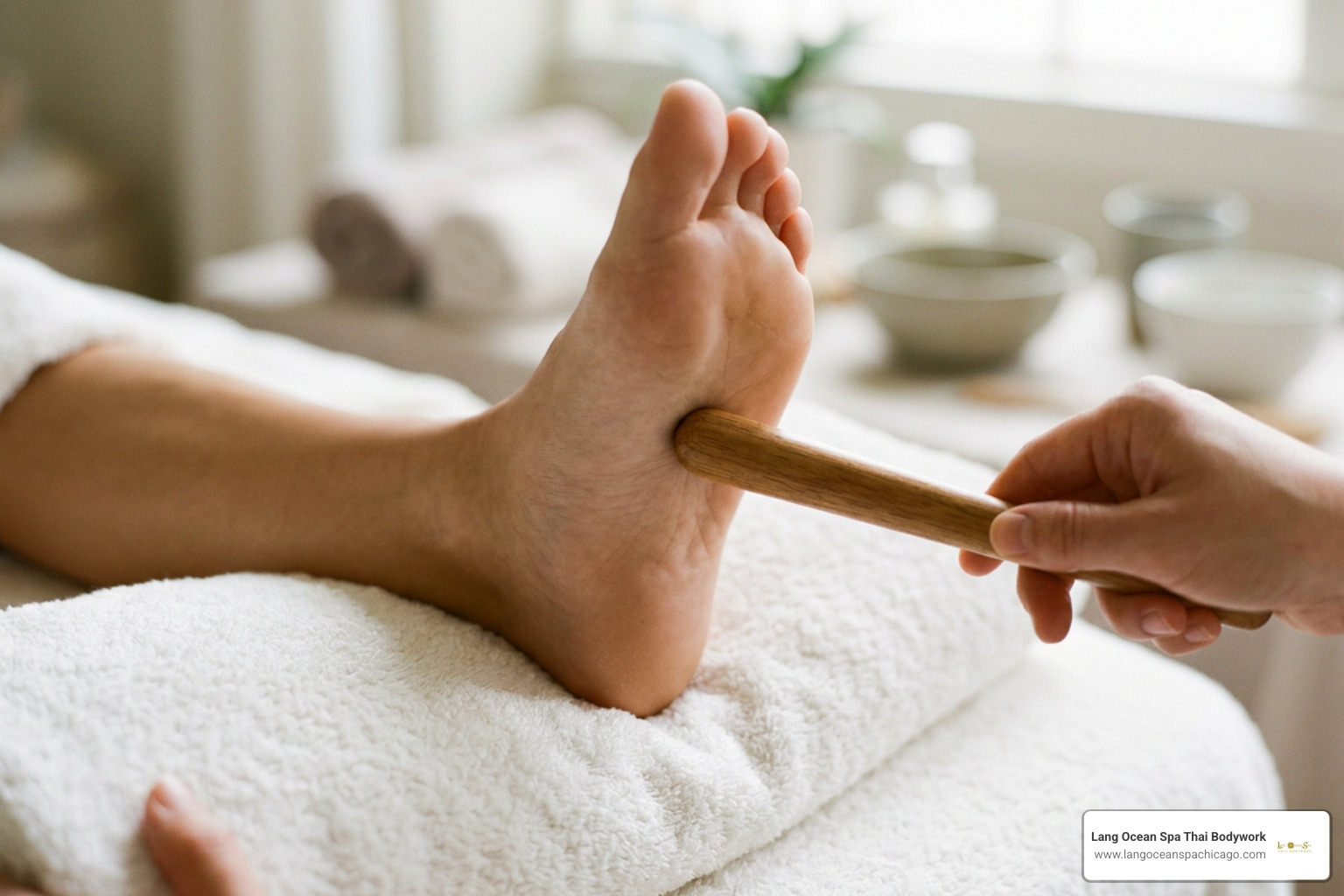
When energy stagnates or becomes blocked along these lines due to stress, fatigue, or poor posture, physical stiffness and discomfort follow. During a session, our practitioners apply rhythmic thumb pressure and use a traditional teak massage stick along these pathways to clear blockages and restore systemic equilibrium. The sole of the foot acts as a comprehensive anatomical mirror:
- The Toes: Linked to the head, neck, brain, and sinuses.
- The Ball of the Foot: Corresponds to the heart, chest, and lungs.
- The Medial Arch: Mapped directly to the spine, digestive tract, and kidneys.
- The Heel: Connected to the lower back, pelvis, and sciatic nerve.
Scientifically Proven Health and Mobility Benefits
While Thai foot therapy has spiritual and historical origins, modern clinical research validates its physiological impact. Clinical trials confirm that targeting the mechanoreceptors, nerve endings, and vascular networks of the feet produces measurable improvements in balance, joint range of motion (ROM), and somatosensory feedback (Chatchawan et al., 2015).
| Measurement Metric | Baseline Score | Post-Treatment (2 Weeks) | Clinical Significance |
|---|---|---|---|
| Timed Up and Go (TUG) | 8.31 ± 1.42 sec | 7.06 ± 1.14 sec | 1.13s faster vs. control; improved dynamic balance |
| One-Leg Stance (Left, Eyes Open) | 27.4 ± 29.52 sec | 56.18 ± 52.90 sec | Over 100% increase in unipedal stability |
| One-Leg Stance (Right, Eyes Open) | 33.62 ± 39.45 sec | 69.30 ± 69.66 sec | Substantial gain in postural equilibrium |
| One-Leg Stance (Left, Eyes Closed) | 2.90 ± 2.99 sec | 12.24 ± 12.04 sec | Enhanced proprioceptive balance |
| One-Leg Stance (Right, Eyes Closed) | 2.74 ± 1.91 sec | 9.68 ± 12.73 sec | Enhanced proprioceptive balance |
| 1st MTP Joint Flexion (Left) | 24.97 ± 8.88° | 28.20 ± 8.03° | Improved big toe joint mobility for gait |
| 1st MTP Joint Extension (Left) | 62.00 ± 12.01° | 67.17 ± 11.32° | Increased push-off capability during walking |
| Ankle Dorsiflexion (Left) | 10.13 ± 4.28° | 15.30 ± 4.04° | Better clearance during walking; reduced tripping |
| Ankle Plantarflexion (Left) | 32.50 ± 5.98° | 38.27 ± 5.25° | Greater propulsion and calf compliance |
| Knee Flexion (Left) | 119.83 ± 7.37° | 124.77 ± 7.66° | Enhanced lower extremity kinetic chain function |
| Knee Extension (Left) | -6.17 ± 2.26° | -3.60 ± 2.18° | Reduced knee joint extension deficits |
| SWMT Plantar Sensation (Left) | 3.03 ± 2.04 pts | 1.43 ± 1.52 pts | Significant restoration of protective sensation |
| SWMT Plantar Sensation (Right) | 3.77 ± 2.06 pts | 1.83 ± 1.64 pts | Significant restoration of protective sensation |
Clinical Results for Balance and Diabetic Neuropathy
Peripheral neuropathy—a common complication affecting up to 50% of older adults with type-2 diabetes—frequently causes balance deficits, loss of protective sensation, and increased fall risks. In a randomized parallel-controlled clinical trial evaluating 60 diabetic patients receiving a 30-minute Thai foot session three times per week for two weeks, participants experienced substantial, statistically significant functional gains.
The Timed Up and Go (TUG) test showed an average improvement of 1.13 seconds over the control group, reducing the time needed to stand, walk, turn, and sit from 8.31 seconds down to 7.06 seconds. Furthermore, Semmes-Weinstein Monofilament Testing (SWMT) showed a reduction in positive sensory loss points on both feet (decreasing from 3.03 to 1.43 on the left foot and 3.77 to 1.83 on the right), demonstrating that targeted stimulation of plantar mechanoreceptors helps restore cutaneous sensitivity and peripheral nerve responsiveness.
Circulation, Lymphatic Flow, and Restorative Relaxation
The rhythmic compression applied to the calves and ankles directly supports the body’s peripheral “muscle pump.” Because gravity causes blood and interstitial fluid to pool in the lower extremities, directional strokes toward the heart encourage venous return and stimulate lymphatic drainage. This process reduces peripheral edema, eases lower-leg heaviness, and helps regulate blood pressure.
Beyond the vascular benefits, sustained rhythmic acupressure downregulates the sympathetic nervous system (“fight or flight”) and activates parasympathetic dominance (“rest and digest”). This physiological shift lowers cortisol, eases mental fatigue, and promotes deep, restorative sleep. For clients carrying intense work stress, discovering how Thai massage can help you to unwind is often the first step toward lasting vitality.
Techniques, Tools, and What to Expect During Treatment
Entering a traditional Thai foot session is an immersive, restorative experience. Sessions typically last 60 minutes, though extended 90-minute options allow for deeper lower-leg unwinding. Clients remain fully clothed throughout the session, resting comfortably on a padded massage table or a reclining lounge chair.
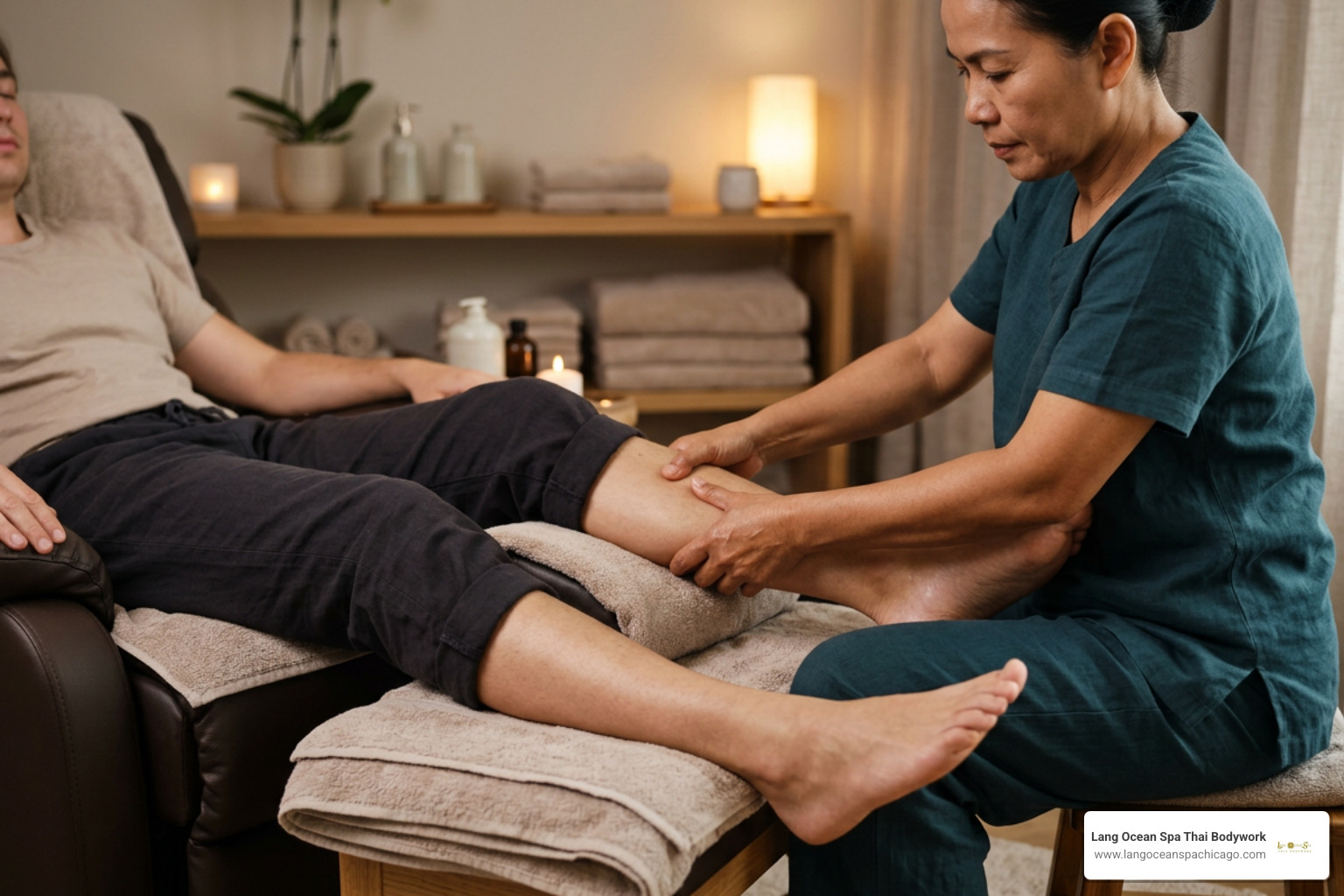
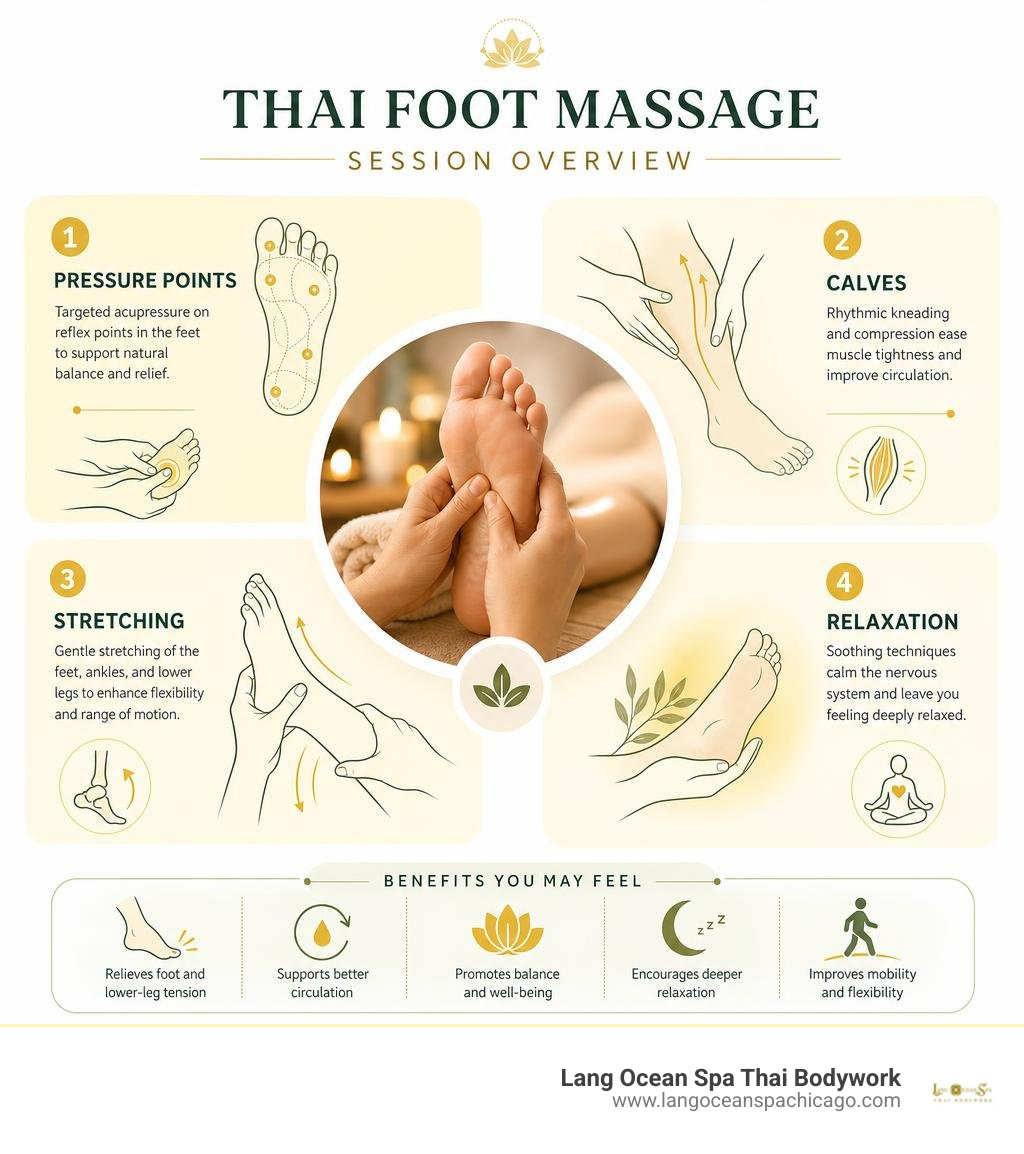
How a Thai Foot Massage Session Is Performed
A complete session follows a structured, time-tested protocol to ensure both muscular and energetic release. For an in-depth breakdown of standard sequences, explore our step-by-step guide to effective foot treatments.
- Purification and Preparation: The session begins with a warm foot bath infused with natural salts or essential oils to soften the skin, dilate superficial capillaries, and calm the mind.
- Warming the Plantar Surface: The therapist applies broad palms-on friction and gentle traction, warming the tissues and preparing the energetic pathways.
- Sen Line & Reflexology Work: Using alternating thumb pressure and smooth strokes, the practitioner systematically works the soles, insteps, lateral borders, and heels.
- Tool-Assisted Point Work: A carved wooden stick stimulates pinpoint reflex zones on the sole with sustained pressure held for 5 to 10 seconds.
- Joint Mobilization and Stretching: Each toe is gently distracted and flexed, the ankles are rotated through their full range of motion, and the plantar fascia is stretched.
- Calf and Lower-Leg Drainage: Working upward from the ankle toward the popliteal fossa behind the knee, the therapist applies long gliding strokes, palm presses, and thumb lines along the tibialis anterior and gastrocnemius muscles.
- Closing Ritual: The feet are wrapped in warm towels to remove excess oils or balms, followed by light tapping to awaken the limbs.
Wooden Stick Acupressure vs. Hands-On Oil Work
An authentic Thai foot session balances two distinct manual tools:
- The Traditional Teak Massage Stick: Hand-carved from dense wood, this tool features a rounded, tapered tip on one end and a thicker, blunt base on the other. It allows the therapist to deliver precise, deep pressure directly into dense plantar fascia and small reflex zones without placing excessive mechanical strain on the practitioner’s thumb joints. The sensation should feel concentrated and therapeutic—a distinct pressure that clients describe as satisfying tension release.
- Herbal Balms and Essential Oils: Therapists use cooling herbal balms (often containing camphor, menthol, or lemongrass) or nourishing botanical oils to facilitate smooth, gliding strokes along the calves and shin lines. The combination creates a pleasant alternation between warming friction and cooling relief.
Modality Comparison: Thai Style vs. Western Massage and Reflexology
Understanding the differences between foot therapies ensures you choose the modality best suited to your wellness goals. Those seeking an affordable Thai massage near me for budget-friendly bliss will appreciate the comprehensive nature of the Thai modality compared to isolated treatments.
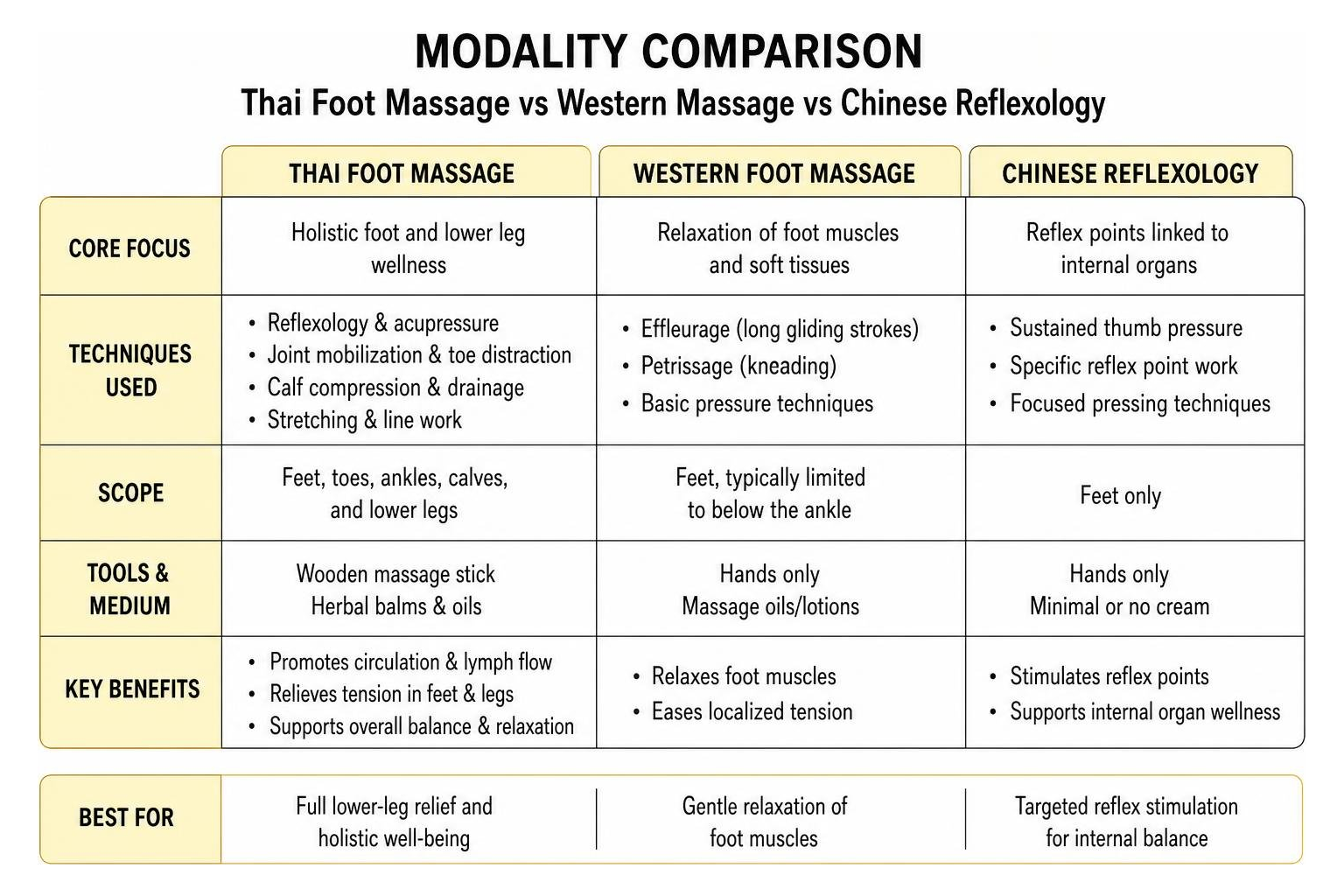
Thai Foot Massage vs Regular Foot Treatments
- Western Foot Massage: Typically integrated into Swedish massage, this approach relies on superficial effleurage and petrissage. It relaxes localized foot muscles but rarely extends past the ankle or integrates systemic reflex points.
- Traditional Chinese Reflexology: Focuses heavily on the microsystem map of the feet, applying intense, sustained thumb pressure to affect internal organs. It is traditionally performed dry or with minimal cream and remains focused exclusively on the feet.
- Thai Foot Massage: Combines Chinese reflexology, Indian Ayurvedic line work, and Shiatsu-style compression into a cohesive whole-limb treatment. It integrates foot reflexology with active joint mobilization, toe distraction, and extensive lower-leg muscle work.
Ideal Frequency and Safety Considerations
For maintaining long-term mobility, healthy circulation, and stress management, scheduling one to two sessions per week provides cumulative benefits. For general relaxation, bi-weekly or monthly sessions maintain lower-leg lightness.
While Thai foot therapy is safe for most individuals, specific health conditions require caution or medical clearance:
- Absolute Contraindications: Active deep vein thrombosis (DVT), acute phlebitis, local skin infections or open lesions, unexplained severe swelling, high fever, or recent lower-limb fractures.
- Precautions & Adaptations:
- Pregnancy: Gentle relaxation work is safe during the second and third trimesters, but intense pressure on the medial ankle (associated with the uterus and pelvis) must be avoided.
- Diabetes: Clients with neuropathy should inform their therapist so pressure can be carefully calibrated to protect skin integrity.
Frequently Asked Questions About Foot Bodywork
Does Thai foot massage hurt?
A skilled therapist calibrates pressure to match your personal tolerance. While working through tight arches, bound fascia, or congested reflex points can create a momentary sensation of intense pressure—often called a “good hurt”—the treatment should never cause sharp or bruising pain. Always communicate with your practitioner if the pressure feels too deep.
What should I wear to a foot massage appointment?
Wear loose-fitting, comfortable pants that can easily be rolled up above your knees to allow unobstructed access to your calves and shins. Athletic pants, yoga leggings that pull up easily, or wide-leg trousers are ideal.
Can Thai foot massage help with plantar fasciitis and athletic recovery?
Yes. Runners, dancers, and active individuals frequently use Thai foot therapy to relieve tension in the plantar aponeurosis, Achilles tendon, and gastrocnemius muscles. The combination of targeted tool acupressure and lower-leg compression helps break down fascial adhesions, stimulates localized blood flow, and accelerates muscular recovery after intense training.
Conclusion
Your feet carry the full burden of your daily routine—yet they are often the most neglected part of the body. Thai foot massage bridges the gap between ancient energetic wisdom and clinically proven physical rehabilitation. Whether your goal is to recover from long hours on your feet, improve balance, or simply unwind from mental stress, this dynamic therapy restores lightness to your step and balance to your entire body.
Experience authentic, therapeutic bodywork in a serene, welcoming environment. Explore our complete selection of restorative wellness services at Lang Ocean Spa Thai Bodywork, and reserve your session to revitalize your feet and restore your physical balance today.
References
Chatchawan U, Eungpinichpong W, Plandee P, Yamauchi J. “Effects of thai foot massage on balance performance in diabetic patients with peripheral neuropathy: a randomized parallel-controlled trial..” Medical science monitor basic research, 2015. PMCID PMC4416467.