Thai Herbal Compress Benefits and How to Use One
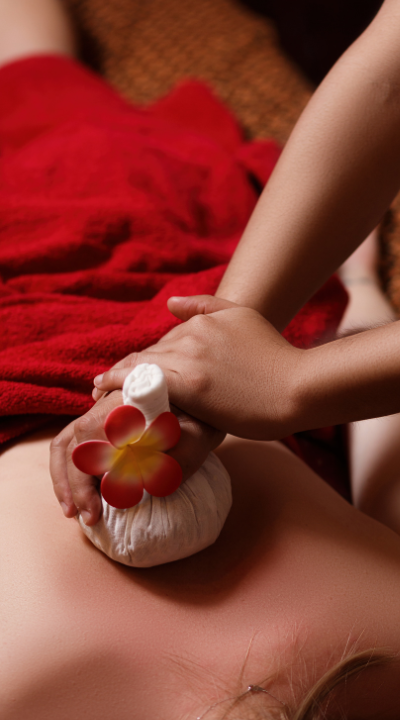
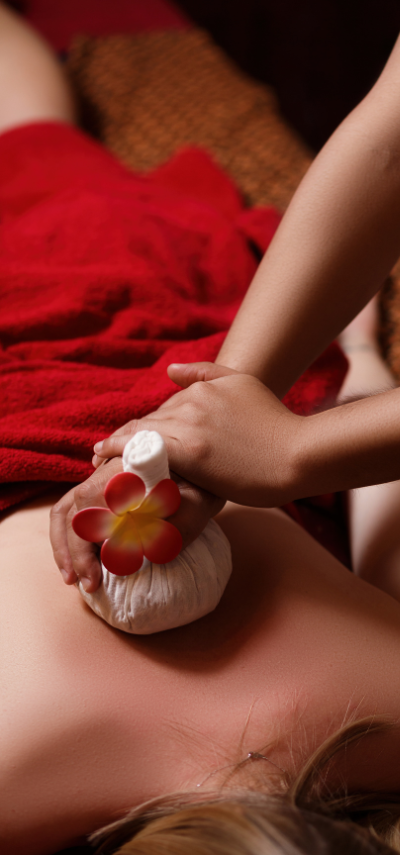
A Thai herbal compress, or luk prakob, is a cloth bundle filled with herbs, steamed, and pressed gently against the body. Its warmth may help ease muscle tightness and soreness, while the herbs add a calming scent. To use one, steam it for about 10 to 15 minutes, let it cool until comfortably warm, test it on your wrist, then press or roll it over unbroken skin. Research has not yet shown that the herbs relieve pain better than heat alone.
I’m June Liu, founder of Lang Ocean Spa Thai Bodywork in Chicago, where I’ve helped clients seeking relief from stress and tension through Thai bodywork since 2016. I’ll explain what a Thai herbal compress may offer, what the evidence says, and how to use one safely.
Understanding the Traditional Thai Herbal Compress
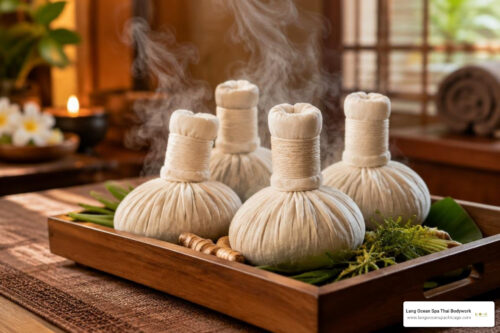
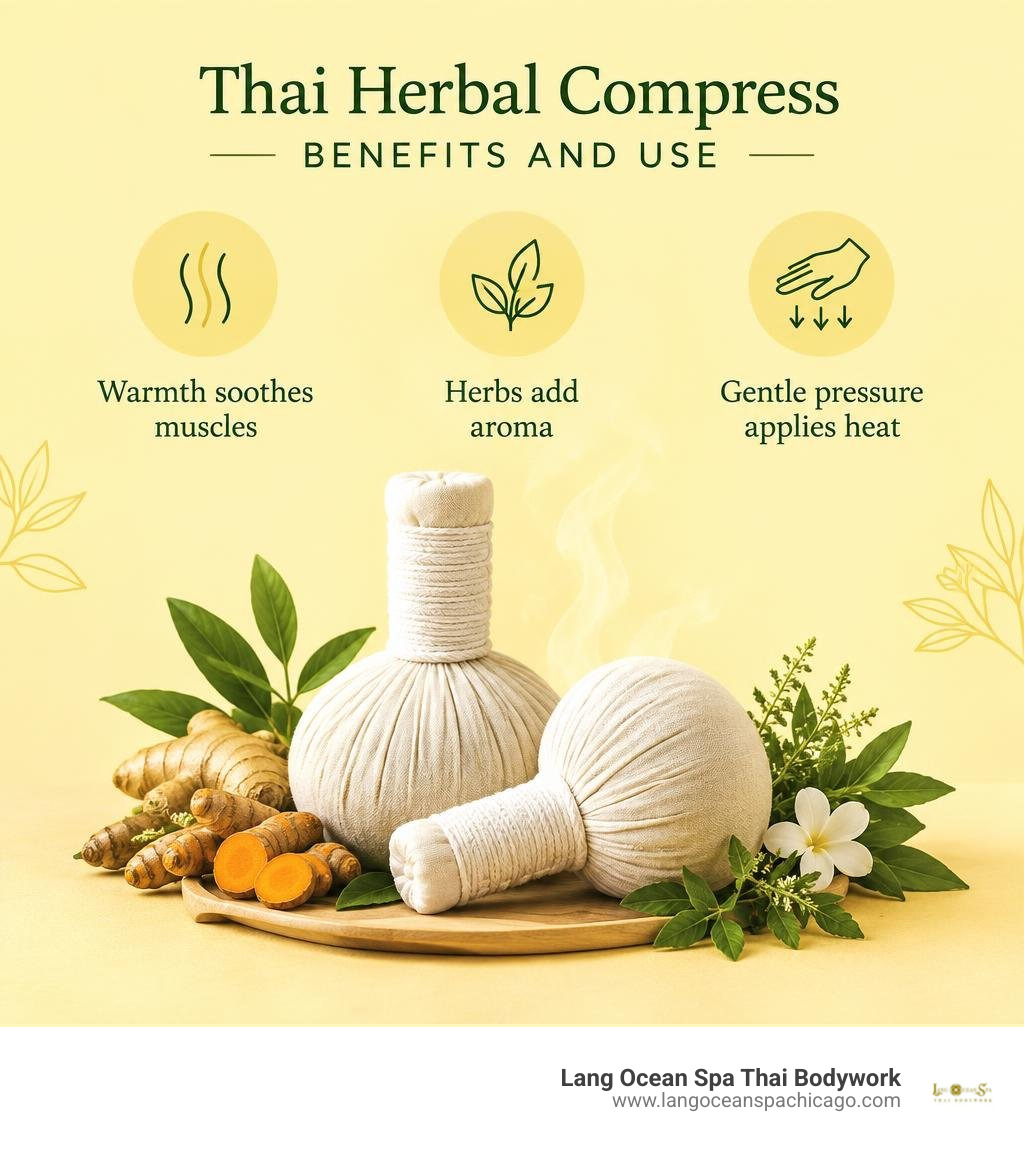
In traditional Thai medicine, the herbal ball is known natively as Luk Prakob (literally translated as “herbal pressing sphere”). For hundreds of years, rural healers, palace physicians, and traditional bodyworkers have relied on these tightly bound muslin pouches to relieve physical exhaustion, soothe aching joints, and revive weary spirits.
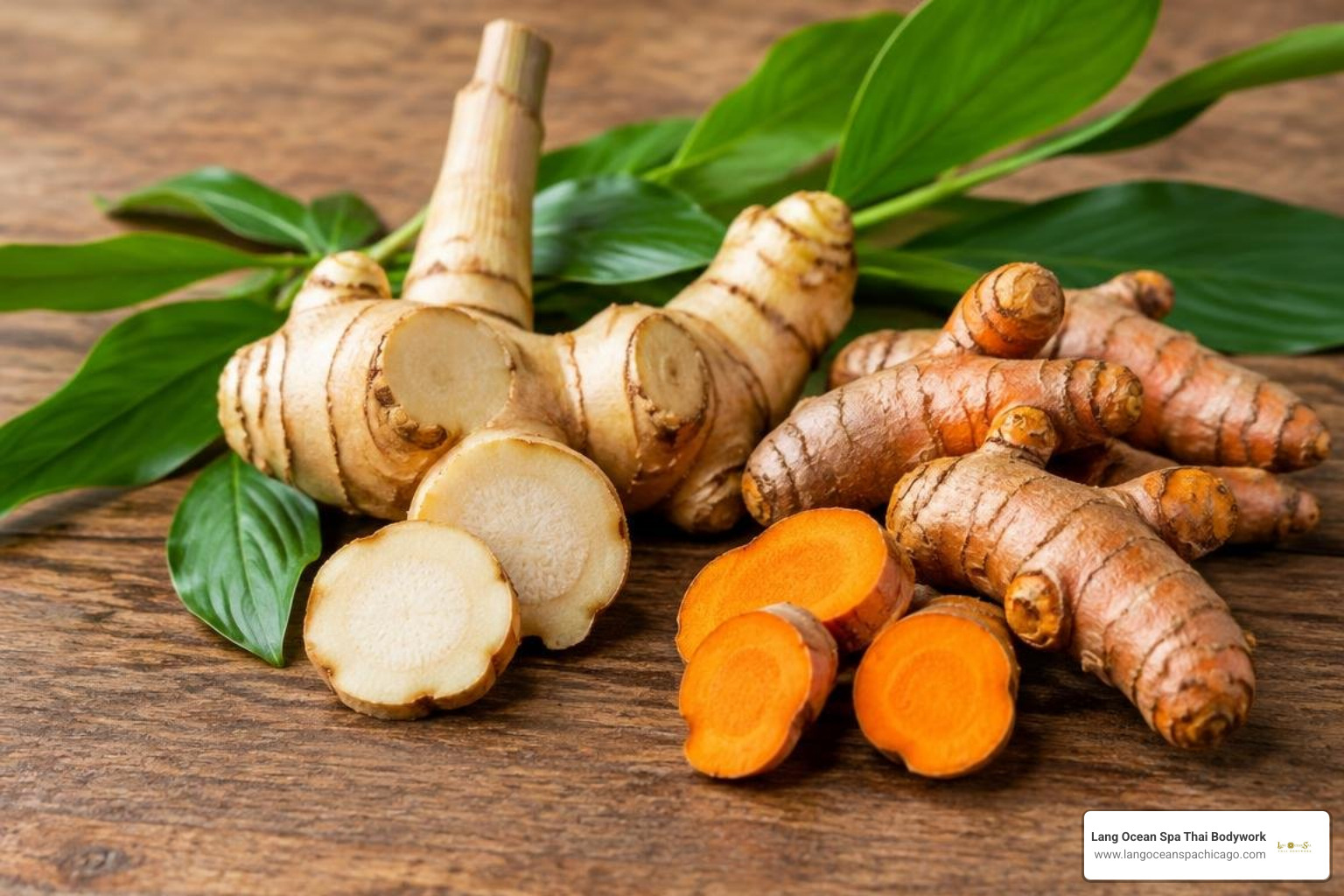
A typical compress consists of dried, chopped botanical roots, leaves, and essential resins packed firmly into unbleached cotton or muslin. The fabric is drawn tight at the top to form a firm handle, creating an ergonomic tool that allows practitioners to work deeply along the body’s energy pathways (known as Sen lines). As explored in our guide to Thai spa massage services, this botanical heat therapy is often integrated into floor bodywork routines to melt stubborn knots before assisted stretching. Today, modern wellness enthusiasts and international researchers alike continue to study why traditional herbal compresses have endured for centuries as a cornerstone of holistic recovery.
Traditional Medicinal Ingredients and Their Properties
The therapeutic profile of a compress comes from its botanical recipe. While regional variations exist, standard formulas rely on several foundational herbs:
- Plai (Zingiber montanum): Often called the prized cousin of ginger, Plai is the central star of Thai bodywork. It contains potent natural anti-inflammatory compounds widely recognized for easing muscle spasms, ligament strains, and joint aches.
- Turmeric (Curcuma longa): Famous for its active compound, curcumin, turmeric delivers systemic antioxidant protection, calms dermal irritation, and supports tissue repair.
- Camphor Crystals: Derived from the camphor tree, this aromatic resin produces a cooling-to-warming sensation on the skin. Its sharp, invigorating scent helps open the respiratory passages while easing local discomfort.
- Lemongrass (Cymbopogon citratus): Rich in citral, lemongrass brings refreshing aromatherapeutic qualities that clear mental fatigue, soothe surface inflammation, and tone the skin.
- Kaffir Lime Peel (Citrus hystrix): The essential oils in the peel stimulate healthy microcirculation while providing an uplifting citrus scent.
- Tamarind Leaves (Tamarindus indica): Containing natural alpha-hydroxy acids (AHAs), tamarind gently conditions and brightens the outer skin barrier while acting as a natural astringent.
- Rock Salt: Coarse mineral salt acts as a thermal conductor, helping the compress retain steady heat throughout prolonged treatments while drawing botanical oils out into the fabric.
Cultural Significance and Official Recognition in Thai Healthcare
In Thailand, Luk Prakob is far more than a luxury spa treatment; it is an officially sanctioned medical intervention. The Thai Ministry of Public Health recognizes the compress as an approved treatment modality, listing it on the official National List of Essential Medicines for alleviating muscle sprains, joint stiffness, and chronic bodily pain.
In 2013, the Thai government designated the compress as one of the country’s “Champion Herbal Products” due to its cultural value and clinical utility. From rural district hospitals to premier wellness retreats, hot compress therapy remains a respected bridge connecting royal healing traditions with modern primary care.
Scientific Evidence and Clinical Efficacy
While the sensory enjoyment of hot herbal bundles is undeniable, modern healthcare practitioners increasingly look to clinical research to understand the measurable impacts of these botanical therapies.
Proven Health Benefits of a Thai Herbal Compress
Scientific interest in traditional bodywork has surged, particularly regarding joint mobility and soft-tissue recovery. Clients who explore soothing herbal ball therapy often report rapid relief from chronic tension (Dhippayom et al., 2015).
A systematic review and meta-analysis evaluating 13 clinical studies with a total of 778 patients examined how heated compresses perform against modern standards (Dhippayom et al., 2015). In patients with knee osteoarthritis (OA), the herbal compress reduced pain scores slightly more than combined comparators (weighted mean difference of 0.419; 95% CI -0.004, 0.842) (Dhippayom et al., 2015). When pitted head-to-head against oral non-steroidal anti-inflammatory drugs (NSAIDs), targeted knee exercises, or conventional hot packs, the overall pain-relieving effects were comparable (Dhippayom et al., 2015). For individuals seeking non-pharmacological comfort as part of their integrative wellness routine, these findings demonstrate that traditional hot compresses offer genuine therapeutic value for easing joint stiffness without gastrointestinal side effects.
Postpartum Care and Lactation Induction
One of the most remarkable traditional applications of Luk Prakob lies in maternal care. In Thai postpartum traditions (Yu Fai), warm herbal bundles are gently applied across the abdomen, lower back, and breasts to alleviate labor soreness and support recovery.
Clinical data supports this postpartum use. In pooled meta-analyses, postpartum mothers receiving herbal compress applications experienced a significant reduction in the time required to achieve initial milk secretion compared to those receiving routine postpartum care (mean difference of -394.425 minutes, or roughly 6.5 hours earlier; 95% CI -620.084, -168.766) (Dhippayom et al., 2015). The localized warmth improves vascular circulation throughout mammary tissue, while therapeutic pressing encourages hormonal release and relaxes the pelvic floor musculature.
Physiological Mechanism: Heat, Herbs, and Aromatherapy
How exactly does a compress deliver its soothing effects? The therapeutic action works through a three-part mechanism:
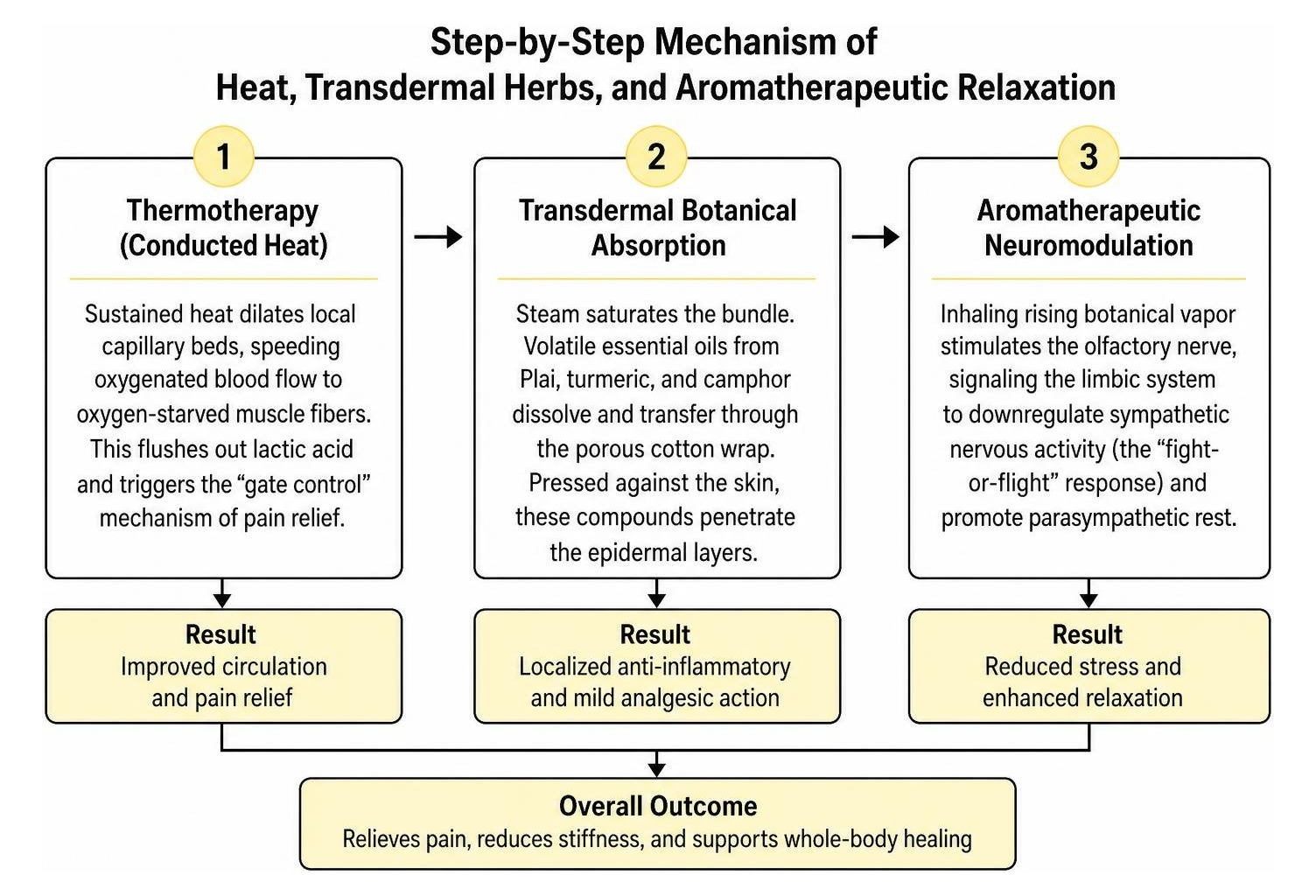
- Thermotherapy (Conducted Heat): Sustained heat dilates local capillary beds, speeding oxygenated blood flow directly to oxygen-starved muscle fibers. This process flushes out built-up metabolic waste like lactic acid and triggers the “gate control” mechanism of pain relief by flooding sensory nerves with warm thermal signals.
- Transdermal Botanical Absorption: As steam saturates the bundle, volatile essential oils from the Plai, turmeric, and camphor dissolve and transfer through the porous cotton wrap. When pressed against the skin, these lipophilic compounds penetrate the epidermal layers, exerting localized anti-inflammatory and mild analgesic actions.
- Aromatherapeutic Neuromodulation: Inhaling the rising botanical vapor stimulates the olfactory nerve, signaling the limbic system to downregulate sympathetic nervous activity (the “fight-or-flight” response) and promote parasympathetic rest.
Preparation, Application, and Safety Guidelines
Applying a traditional herbal compress requires attention to preparation, temperature control, and body mechanics.

Equipment and Techniques for Applying a Thai Herbal Compress
To perform an authentic treatment, practitioners use specialized tools:
- Herbal Compress Balls: Typically weighing between 100 grams (for localized or facial work) and 200 grams (for full-body application).
- Electric Steamer or Traditional Bamboo Pot: Used to thoroughly heat the bundles.
- Dense Thai Floor Mat & Kapok Bolsters: Supportive firm cushions that keep the client’s joints aligned during assisted pressure.
Many clients appreciate learning about sustainable Thai herbal traditions, which emphasize using sustainably harvested, unbleached natural cotton wraps.
Preparation Steps:
- Hydration: Immerse the dry herbal bundles in cool water for 5 minutes so the herbs absorb moisture.
- Steaming: Place the damp bundles into a preheated steamer for 10 to 15 minutes until fragrant and hot throughout.
- Temperature Testing: Remove one compress by its fabric handle. Always test its thermal intensity against your inner forearm or wrist before touching the client.
Core Massage Techniques: Stamping, Rolling, and Pressing
Because a freshly steamed compress is hot, the therapist adjusts their movement speed to match the bundle’s temperature:
- Stamping (Quick Tapping): When the compress is hottest, the therapist applies brief, rapid tapping motions over broad muscle groups (such as the upper back, glutes, and thighs). This introduces heat without burning the skin.
- Rolling & Gliding: As the ball cools slightly, the therapist uses continuous, rolling sweeps along the Sen lines, working along muscle fibers to encourage lymphatic drainage.
- Stationary Pressing: Once the bundle settles into a warm, comfortable temperature, the practitioner applies steady, sustained downward pressure over key acupressure points to release deeper muscular tension.
Therapists work with two compresses simultaneously, rotating one back into the steamer while working with the other to maintain unbroken, continuous warmth.
Safety Concerns, Quality Control, and Contraindications
While herbal compress therapy is very safe when performed by experienced practitioners, basic safety guidelines should always be followed:
- Thermal Burns: Unmonitored, overheated compresses can cause skin burns. Therapists must maintain verbal communication with the client and regularly test bundle temperatures.
- Skin Sensitivities & Allergies: In rare cases, individuals may experience allergic contact dermatitis or hives from camphor or citrus oils. A study examining adverse event reporting noted that approximately 5 out of 600 clients (0.83%) experienced mild skin reactions such as rash or urticaria (Dhippayom et al., 2015).
- Product Contamination: Quality sourcing matters. A quality screening of herbal compresses manufactured across eight provinces in Northern Thailand revealed that 7 out of 16 tested samples (43.8%) had microbial contamination, and 1 out of 16 (6.2%) showed trace cadmium contamination (Dhippayom et al., 2015). Spas must source certified, sterile-packaged herbs from reputable suppliers.
- Absolute Contraindications: Compresses should never be applied over open wounds, active skin infections, fresh surgical incisions, acute bruising, or areas affected by severe peripheral neuropathy where heat sensation is impaired.
Comparing Thai Herbal Compresses with Other Modalities
Understanding how a compress session compares to other therapeutic modalities helps you choose the best treatment for your body’s needs:
| Modality | Primary Mechanism | Pressure Style | Typical Clothing | Best Suited For |
|---|---|---|---|---|
| Thai Herbal Compress | Moist heat, transdermal botanical oils, rhythmic pressure | Moderate stamping, rolling, and stationary pressing | Loose cotton clothing or draped linens | Chronic joint stiffness, muscle aches, fatigue, and stress |
| Traditional Thai Massage | Dry acupressure, passive yoga stretching, energy line work | Firm, rhythmic compression using palms, thumbs, and feet | Fully clothed in loose, comfortable attire | Improving mobility, deep postural release, and whole-body flexibility |
Combining herbal bundles with restorative Thai massage methods allows clients to experience both deep muscle stretching and soothing heat in a single session.
Treatment Costs and Spa Availability in Thailand vs. the US
Because Luk Prakob requires specialized herbs and preparation, pricing varies depending on where you receive care.
In Thailand, compress treatments are widely accessible across day spas and clinics. A standalone 60- to 90-minute session typically ranges between 1,200 and 1,700 THB (approximately $35 to $50 USD), while simpler spas may offer a compress add-on for around 300 THB ($9 USD).
In major US metropolitan areas, high-quality Thai bodywork requires imported herbs and specialized practitioner training. Dedicated 90-minute to 120-minute sessions generally range from $180 to $265. At Lang Ocean Spa Thai Bodywork, we provide clear, transparent massage pricing across our Chicago locations, making authentic Thai bodywork accessible to our local community.
Frequently Asked Questions About Thai Herbal Compresses
How long do the therapeutic benefits of a Thai herbal compress session last?
Most clients experience noticeable pain relief and improved joint mobility for 3 to 7 days following a session. Staying well-hydrated after your appointment helps prolong these benefits by assisting your tissues in clearing metabolic waste.
Can Thai herbal compress balls be reused at home?
In professional spa settings, compresses are strictly single-client tools for sanitary reasons. At home, you can store your personal compress in a sealed container in the refrigerator and reuse it up to 3 to 4 times within a week before discarding it to avoid microbial growth.
Are there any people who should avoid Thai herbal compress therapy?
Anyone with loss of thermal sensation, active fevers, open rashes, deep vein thrombosis, or known contact allergies to camphor, ginger, or citrus should avoid hot compress therapy. Expectant mothers should consult their physician and ensure treatments avoid abdominal placements during pregnancy.
Conclusion
The Thai herbal compress offers a time-tested approach to recovery, blending soothing heat, botanical ingredients, and rhythmic bodywork into a deeply grounding experience.
Whether you are looking to ease persistent joint stiffness, recover from strenuous workouts, or unwind from daily tension, our team at Lang Ocean Spa Thai Bodywork welcomes you to our serene Chicago locations in River North, Lincoln Park, and Streeterville. Explore our full menu of professional Thai massage services and discover how this traditional botanical therapy can support your wellness routine.
References
Dhippayom T, Kongkaew C, Chaiyakunapruk N, Dilokthornsakul P, Sruamsiri R, Saokaew S, Chuthaputti A. “Clinical effects of thai herbal compress: a systematic review and meta-analysis..” Evidence-based complementary and alternative medicine : eCAM, 2015. PMCID PMC4377500.