

Where to Book Deep Tissue Massage in Chicago
Looking for deep tissue massage in Chicago? Start with a therapist whose Illinois license you can verify. Before booking, ask whether they tailor pressure to your comfort, what the session costs, and whether they have time to discuss the areas that bother you. Deep tissue work uses slow, focused pressure on tight muscles; it should not feel like a test of how much pain you can take.
If long desk hours or a crowded commute leave your neck and shoulders tense, a convenient location and a therapist who listens may matter more than the strongest pressure on the menu. This guide will help you compare your options, know what to expect, and book with confidence.
I’m June Liu, founder of Lang Ocean Spa Thai Bodywork, where I’ve helped Chicago clients make time for personalized bodywork since 2016. If you are planning to book deep tissue in Chicago, I’ll help you sort through the practical choices before your first visit.

As of October 2026, deep tissue massage remains one of the most requested modalities across the city, accounting for approximately 30% of all local massage appointments. With the deep tissue massage industry expanding by 15% annually over the last three years, more Chicagoans than ever are turning to focused muscular work to manage daily physical wear and tear. According to the American Massage Therapy Association, massage therapy is increasingly recognized as part of an integrated approach to managing chronic pain and supporting overall wellness.
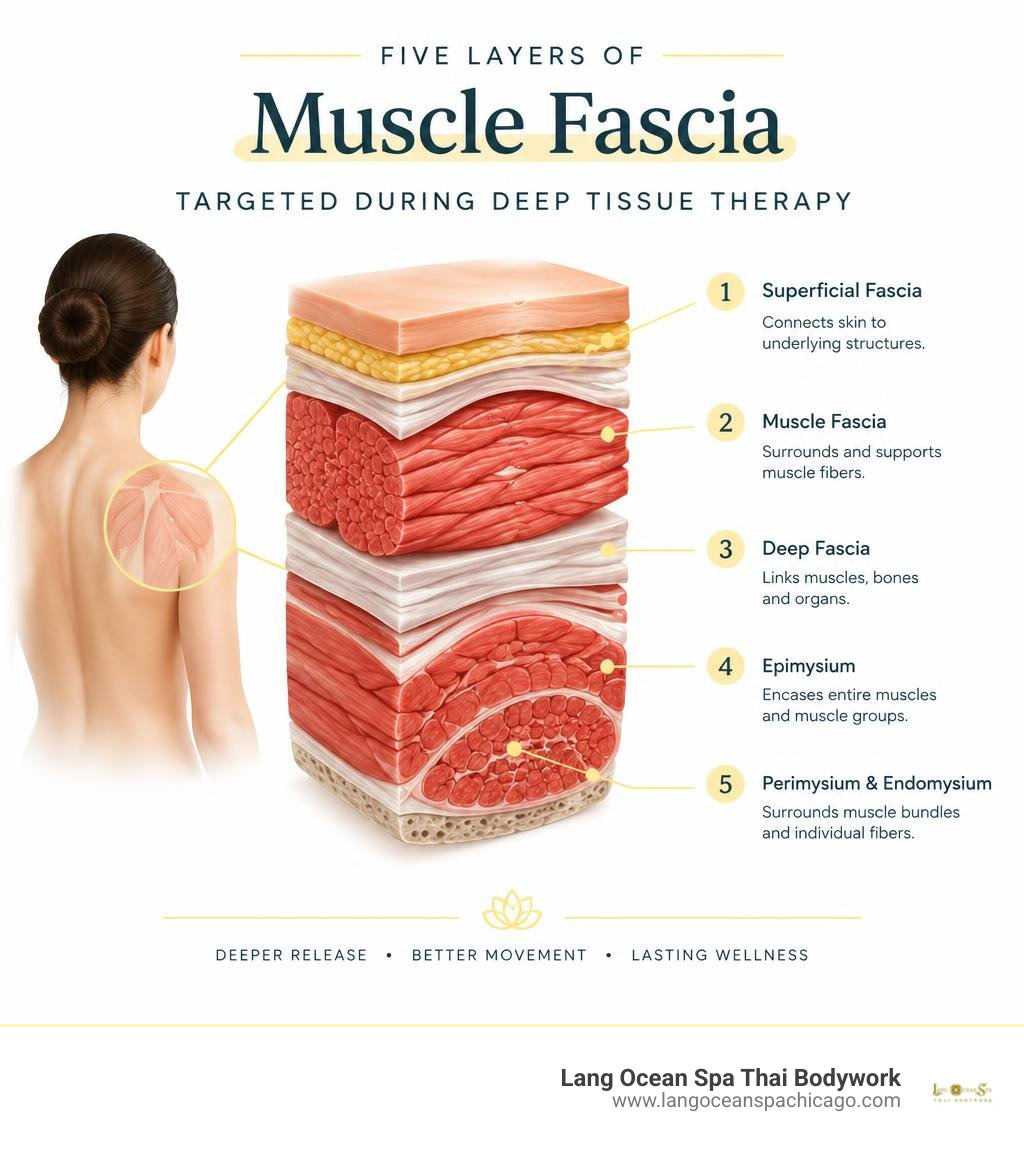
The Science and Mechanics of Deep Tissue Chicago
Deep tissue massage works by systematically releasing adhesions—commonly known as muscle knots—and restoring glide between your muscle fibers and surrounding connective tissues (fascia). When posture slips or muscles stay contracted for hours, fascial layers dehydrate and stick together, creating dense, tender trigger points that restrict blood flow and irritate nerve endings.

During a focused session, a practitioner utilizes thumbs, knuckles, forearms, and elbows to apply sustained, deliberate pressure across the grain of muscle fibers. This neuromuscular approach encourages tight bands to lengthen, stimulates circulation, and triggers the parasympathetic nervous system, easing systemic tension.
Deep Tissue vs. Thai Bodywork Comparison
| Feature | Deep Tissue Massage | Authentic Thai Bodywork |
|---|---|---|
| Primary Technique | Slow strokes, friction, and sustained ischemic compression | Rhythmic compression, energy line work, and assisted stretching |
| Typical Attire | Disrobed under professional draping on a massage table | Fully clothed in loose garments on a padded floor mat or table |
| Use of Oils/Lotions | Yes, minimal oil or lotion for direct skin-on-muscle contact | Generally dry, utilizing body mechanics, palms, and feet |
| Target Depth | Deep fascial layers, postural muscles, and trigger points | Whole-body myofascial chains, joint capsules, and energy pathways |
| Primary Outcome | Localized knot release and alleviation of chronic tension | Enhanced range of motion, overall flexibility, and full-body vitality |
How Deep Tissue Chicago Compares to Traditional Modalities
While general relaxation bodywork emphasizes light effleurage strokes for surface-level calming, deep tissue targets deeper structural layers. The slow tempo ensures outer muscles relax first, allowing the therapist to access deeper postural stabilizers without triggering involuntary protective spasms.
Many clients benefit from blending deep tissue techniques with Thai therapeutic massage to stretch stress away. Combining deep compression with passive yoga-like stretches opens the joints, extends the myofascial lines, and provides comprehensive tension relief.
Target Relief for Commuters, Desk Workers, and Athletes
The physical demands of daily city life create distinct physical strain patterns across Chicago neighborhoods:
- Desk Ergonomics & Tech Neck: Hours spent working over laptops in River North offices tighten the pectorals, overstretch the upper back, and place constant strain on the levator scapulae and cervical spine.
- Transit Strain: Commuting along CTA transit lines, navigating cold-weather wind tunnels, and carrying heavy bags cause chronic elevation of the shoulders and persistent hip stiffness.
- Athletic Recovery: Approximately 40% of deep tissue clients across the city are runners, cyclists, and fitness enthusiasts training along the Lakefront Trail. Over 60% of Chicago residents who receive consistent deep tissue sessions report a noticeable reduction in chronic muscular pain within 4 to 6 visits.
For many Chicagoans, the most effective approach is not choosing one modality over another, but understanding how different forms of bodywork complement each other. A session that combines focused deep tissue work with broader stretching can address both localized trigger points and whole-body mobility in a single visit.
Pricing, Standards, and Safety Protocols
Therapeutic bodywork should always follow established safety and professional standards. In Illinois, professional massage therapists are licensed under the Illinois Department of Financial and Professional Regulation (IDFPR), requiring accredited education, background checks, and documented clinical training hours.

Key Contraindications
While intensive bodywork is safe for most people, certain health conditions require caution or alternative approaches:
- Active Blood Clots or DVT: Deep pressure can dislodge clots; medical clearance is mandatory.
- Acute Inflammation or Injuries: Recent sprains, open wounds, or unhealed bone fractures require healing time before localized pressure can be applied.
- Uncontrolled Hypertension: Intensive circulatory stimulation should be approached conservatively.
- Pregnancy: Dedicated prenatal modalities should replace standard deep tissue work during early trimesters.
Average Rates and Quality Benchmarks
The average cost for a 60-minute deep tissue massage in Chicago ranges between $80 and $120, with 90-minute sessions generally running from $130 to $175. Pricing varies by neighborhood, facility amenities, and therapist experience. A standard 15% to 20% gratuity is customary for attentive service. For a complete overview of regional options, explore our quick start guide to local massages.
Preparing for and Recovering from Intensive Bodywork
Getting the most out of your session involves simple habits before and after your appointment:
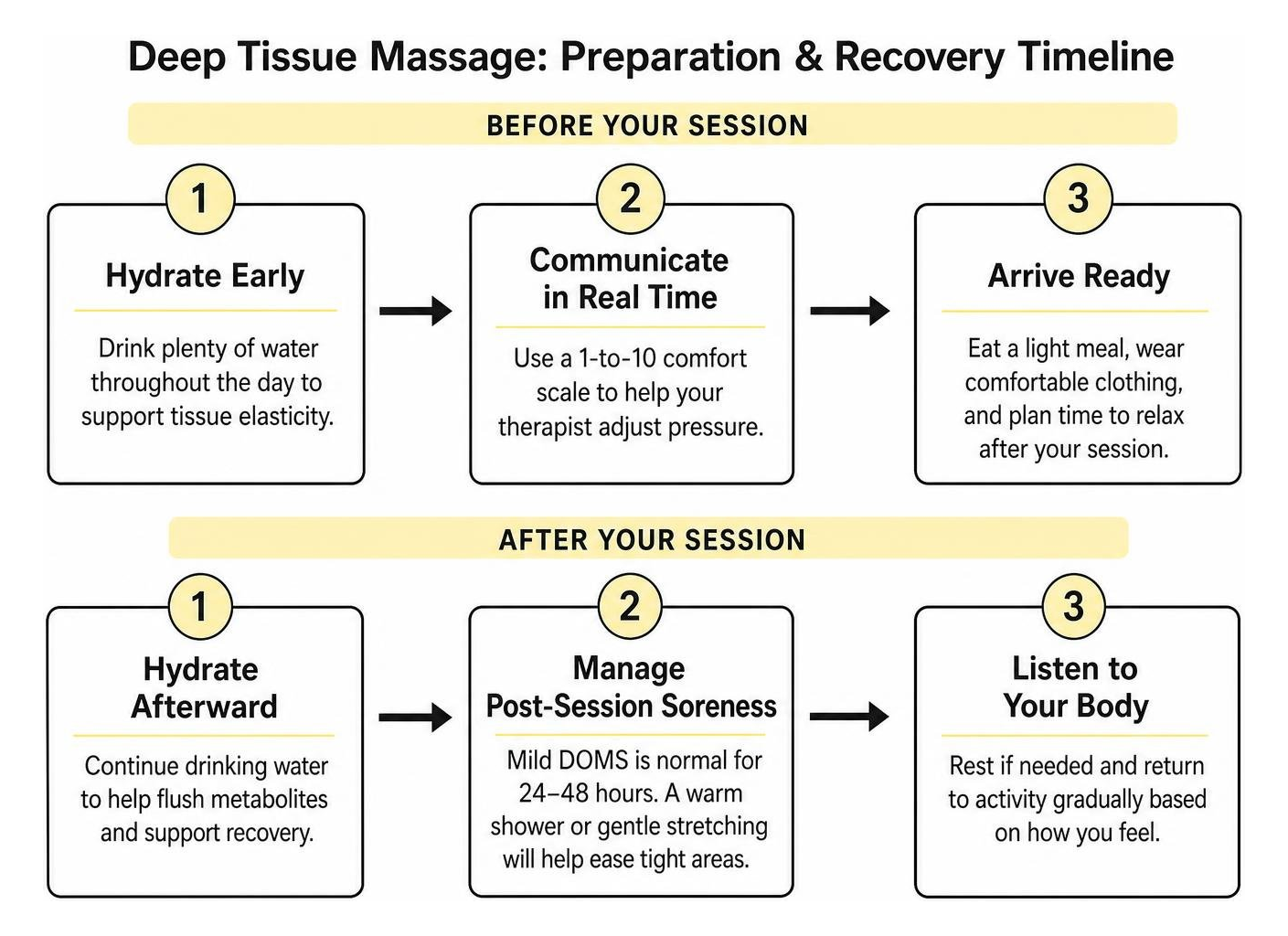
- Hydrate Early: Drink plenty of water throughout the day to support tissue elasticity.
- Communicate in Real Time: Use a 1-to-10 comfort scale to help your therapist adjust pressure.
- Manage Post-Session Soreness: Mild Delayed Onset Muscle Soreness (DOMS) is normal for 24 to 48 hours. A warm shower or gentle stretching will help ease tight areas.
Before your first appointment, take a few minutes to note where you feel the most persistent tightness. Sharing this information during your intake conversation helps your therapist focus the session on the areas that need the most attention, rather than spending valuable time on regions that are already comfortable.
Strategic Guide to Finding the Best Bodywork in the City
Finding the right bodywork studio means looking for a clean, professional space that offers clear communication and easy scheduling.
Selecting the Right Studio for Deep Tissue Chicago
When choosing a studio, look for:
- Active IDFPR Licensure: Verify that therapists hold current state credentials.
- Clear Intake Discussions: A good therapist asks about your daily habits, focal trouble spots, and pressure preferences.
- Convenient Locations: Studios located near River North, Lincoln Park, or Streeterville save you from fighting traffic right after a relaxing session.
- Transparent Booking: Look for straightforward pricing and easy scheduling, such as booking an affordable full body massage with same-day availability.
Working with a reliable, top-tier wellness partner ensures your treatment plan adapts to your ongoing wellness goals.
Integrating Bodywork with Holistic Wellness
Deep tissue work pairs naturally with other restorative habits. Many clients alternate deep tissue sessions with authentic Thai massage to balance targeted trigger-point release with full-body joint mobilization. Complementing regular bodywork with daily movement, ergonomic desk setups, and mindful hydration helps keep everyday muscle tension under control.
Consistency matters more than intensity. A monthly deep tissue session combined with simple daily habits—such as taking short walking breaks during the workday and adjusting your chair height so your feet rest flat on the floor—can prevent the slow buildup of tension that leads to chronic discomfort. Over time, this integrated approach helps your body maintain the benefits of each session longer.
Frequently Asked Questions About Deep Tissue Massage in Chicago
How much does deep tissue massage typically cost in Chicago?
A 60-minute session generally costs between $80 and $120, while a 90-minute appointment averages $130 to $175. Pricing depends on therapist experience, location, and studio amenities.
Is deep tissue massage supposed to be painful?
No. Deep tissue therapy should produce a productive, relieving sensation—often called “good hurt”—rather than sharp or unbearable pain. If you find yourself holding your breath or clenching other muscles, ask your therapist to lighten the pressure immediately.
How often should Chicagoans schedule deep tissue sessions?
For chronic discomfort or intensive athletic training, scheduling a session every 2 to 3 weeks works well. For general maintenance and everyday posture support, a monthly visit helps prevent tight spots from turning into chronic pain.
What should I wear during a deep tissue massage?
Most clients disrobe to their comfort level under professional draping, which means the therapist only uncovers the area being worked on at any given time. If you prefer to keep certain clothing on, that is perfectly acceptable—your therapist can adjust techniques to work effectively through the fabric or around it.
Can I request a specific pressure level?
Absolutely. Pressure is always tailored to your comfort and therapeutic goals. Communicate openly during the session, and your therapist will adjust their technique accordingly. Deep tissue work should feel productive, not punishing.
Conclusion
Living and working in Chicago comes with plenty of daily activity, but muscle stiffness and chronic tightness do not have to be part of the routine. At Lang Ocean Spa Thai Bodywork, we provide focused, personalized bodywork in a welcoming, tranquil setting with convenient same-day booking. Explore our comprehensive massage services to reserve your next session and give your muscles the relief they need.
Whether you are managing tech neck from long hours at a River North desk, recovering from Lakefront Trail training, or simply looking for a reliable way to unwind after a demanding week, the right bodywork makes a measurable difference. Our therapists take time to understand your specific tension patterns and adjust each session to your comfort level, so you leave feeling looser, lighter, and better equipped for the days ahead.