
Why Finding a Thai Massage Experienced Masseuse Changes Everything
Finding a thai massage experienced masseuse can be the difference between a session that genuinely relieves your chronic tension and one that leaves you frustrated — or worse, injured.
Here’s a quick summary of what to look for when choosing an experienced Thai massage therapist:
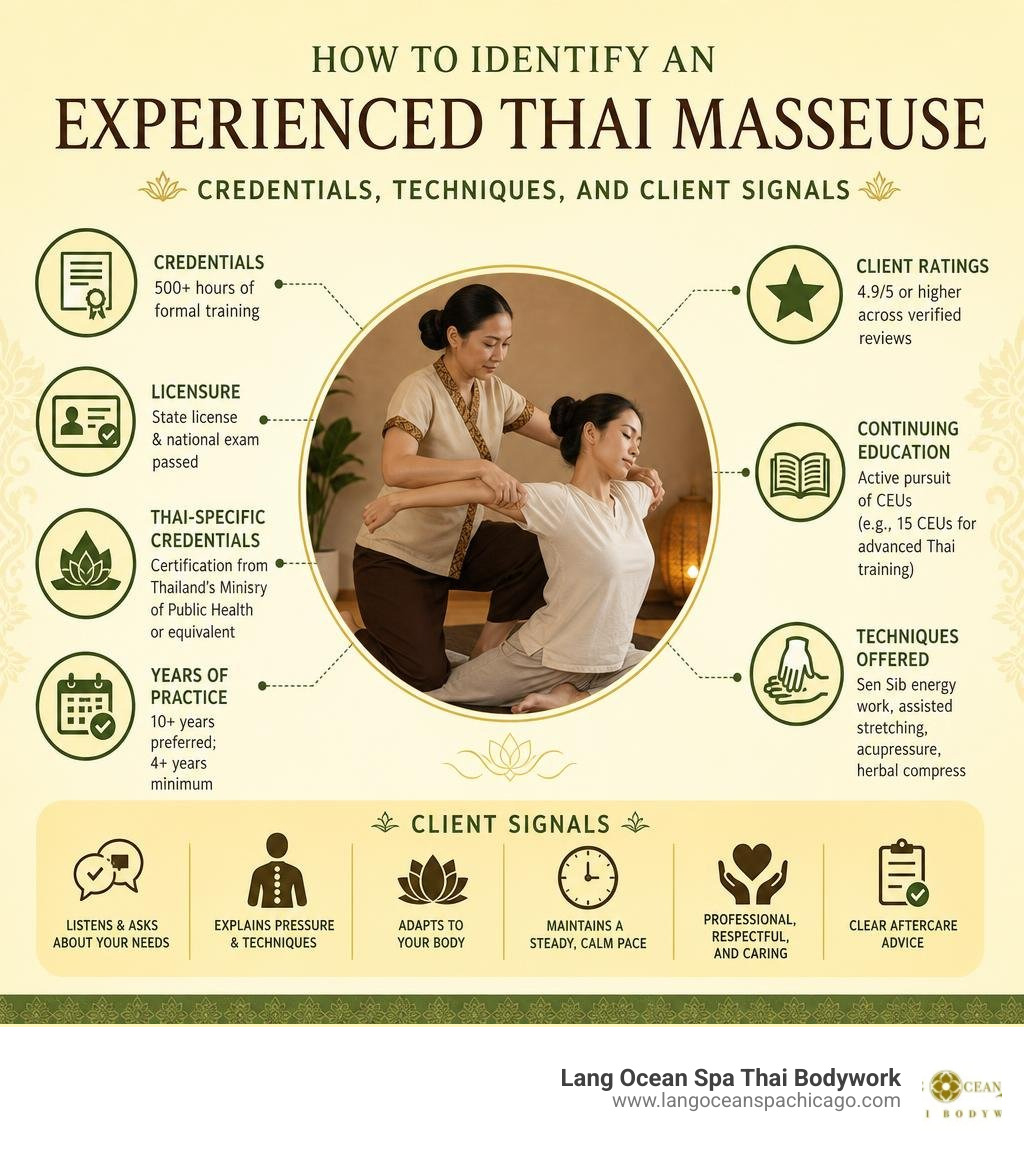
| What to Check | What to Look For |
|---|---|
| Training hours | 500+ hours of formal massage training |
| Licensure | State massage license + national exam passed |
| Thai-specific credentials | Certification from Thailand’s Ministry of Public Health or equivalent |
| Years of practice | 10+ years preferred; 4+ years minimum |
| Client ratings | 4.9/5 or higher across verified reviews |
| Continuing education | Active pursuit of CEUs (e.g., 15 CEUs for advanced Thai training) |
| Techniques offered | Sen Sib energy work, assisted stretching, acupressure, herbal compress |
Not all massage therapists are trained equally. A general massage therapist and a skilled Thai bodywork practitioner follow very different paths — and your body will feel the difference.
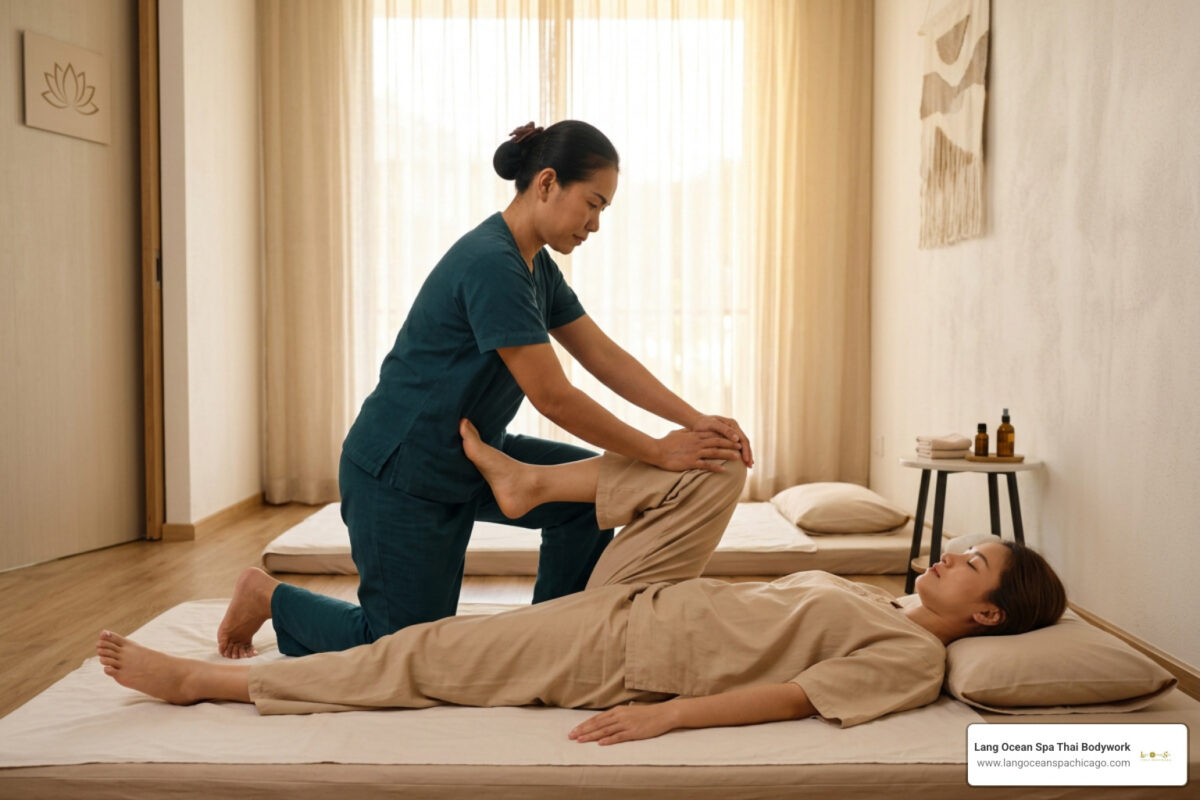
Thai massage is one of the oldest healing systems in the world. It combines assisted stretching, acupressure, and energy line work into a single, fully clothed, floor-based session. Done well, it can release deep muscle tension, restore range of motion, and leave you feeling genuinely reset. Done poorly, it can be uncomfortable or even harmful.
That’s why knowing how to spot real expertise before you book matters so much.
I’m June Liu, founder of Lang Ocean Spa Thai Bodywork in Chicago, where I’ve been helping clients find thai massage experienced masseuse care since 2016. Over nearly a decade of practice, I’ve seen how the right therapist — trained in authentic Thai healing traditions and attuned to each client’s individual needs — can transform someone’s relationship with their own body. In this guide, I’ll walk you through exactly what to look for so you can book with confidence.
What to Look For in a Thai Massage Experienced Masseuse
When you are looking to book a session, you shouldn’t just rely on a pretty website or a low price tag. An experienced practitioner brings a level of safety, anatomical knowledge, and intuitive touch that cannot be faked.
In the United States, professional standards are rigorous. To practice legally, massage therapists must complete a minimum of 500+ hours of formal training at an accredited institution and pass national licensing exams. However, traditional Thai bodywork requires specialized training beyond standard Western massage school curricula.
When vetting a therapist, look for these key indicators of high-level experience:
- Years of Dedicated Practice: Elite studios often cite 10+ years of experience as the ultimate differentiator for their master therapists. At a minimum, look for practitioners with at least 4 years of active practice.
- High Client Volume: Over a 4-year career, a single active therapist can serve 700+ unique clients. This high volume builds a deep “tactile library” in the therapist’s hands, allowing them to instantly recognize muscle patterns and tension.
- Stellar Client Ratings: Look for therapists who maintain an average rating of 4.9/5 or higher. Consistently high reviews indicate that the therapist can adapt their pressure and style to satisfy a wide range of body types.
- Continuing Education: The best therapists never stop learning. Look for practitioners who actively pursue continuing education, often earning 15 CEUs (Continuing Education Units) or more in advanced Thai medical massage, joint mobilization, or traditional herbal therapies.
Verifying Legitimacy and Professionalism
To ensure you are working with a true professional, always verify their credentials. A legitimate therapist in the U.S. will hold an active state license and may be Board Certified in Therapeutic Massage and Bodywork (BCTMB).
For authentic Thai bodywork, look for certifications from internationally recognized bodies. Many highly skilled practitioners receive their foundational training in Thailand. Look for credentials issued by the Union of Thai Traditional Medicine Society or the Ministry of Public Health (MOPH) in Thailand.
For example, world-class therapists like Raphitchaya nonthawatcharayot demonstrate the caliber of training you should look for, holding official certifications in Traditional Thai Massage and advanced clinical therapies. These credentials ensure the therapist understands both Eastern energy maps and Western clinical anatomy.
Why a Thai Massage Experienced Masseuse Understands Sen Sib Energy Lines
A key element that separates a novice from a highly thai massage experienced masseuse is their understanding of the Sen Sib (the ten major energy pathways of the body).
According to traditional Thai medical theory, life force energy flows through these channels. When a channel becomes blocked, it manifests as physical stiffness, pain, or emotional stress. An experienced therapist doesn’t just push on sore muscles; they map your session along these Sen lines to restore natural balance and encourage systemic healing.
By combining physical pressure with energy work, a skilled therapist can address the root cause of your discomfort rather than just masking the symptoms. You can read more about how this holistic approach supports your body’s natural recovery processes on our Wellness and Healing page.
How Thai Massage Differs from Western Modalities
If you have only ever received Western massages like Swedish or deep tissue, walking into your first Thai massage session can feel like entering a whole new world.
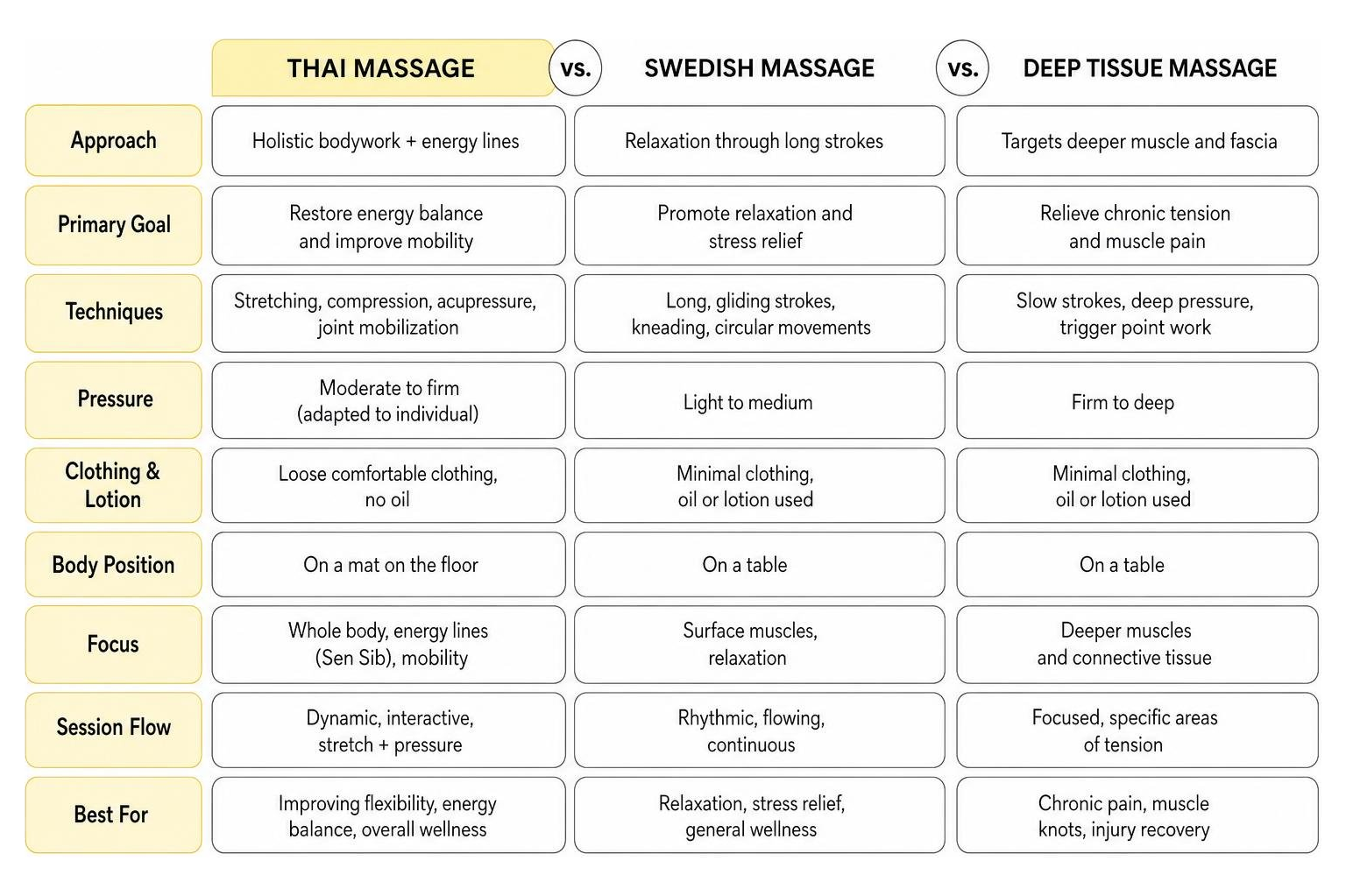
To help you understand the core differences, we have mapped out how traditional Thai bodywork compares to the most common Western modalities:
Thai Massage vs. Swedish and Deep Tissue
The fundamental difference lies in how the therapist interacts with your body.
In a Swedish massage, the primary goal is relaxation through long, flowing strokes (effleurage) using oils or lotions on bare skin. Deep tissue massage goes a step further, applying firm, slow pressure to target deeper muscle layers and fascia.
Traditional Thai massage, on the other hand, is completely oil-free and performed while you are fully clothed in loose, comfortable attire. Instead of gliding over your skin, a thai massage experienced masseuse uses their hands, elbows, knees, and feet to apply rhythmic compression, joint mobilization, and deep, yoga-like stretches.
Thai Massage vs. Sports Massage
While sports massage focuses on athletic performance, injury prevention, and targeted muscle rehabilitation using Western physical therapy principles, Thai massage takes a more holistic, full-body approach.
Sports massage often targets highly specific muscle groups relative to your sport. Thai massage operates on the belief that the entire body is interconnected. By using passive stretching and full-body alignment techniques, Thai massage improves overall range of motion, relieves joint stiffness, and balances your entire skeletal structure.
Core Techniques and Healing Benefits of Authentic Thai Bodywork
An authentic Thai session is a dynamic dance of movement and pressure. When you book a session with us, our experienced team utilizes a variety of classical techniques designed to open up your joints and melt away stubborn tension. You can explore our full range of traditional treatments on our Services page.
Assisted Stretching and Acupressure
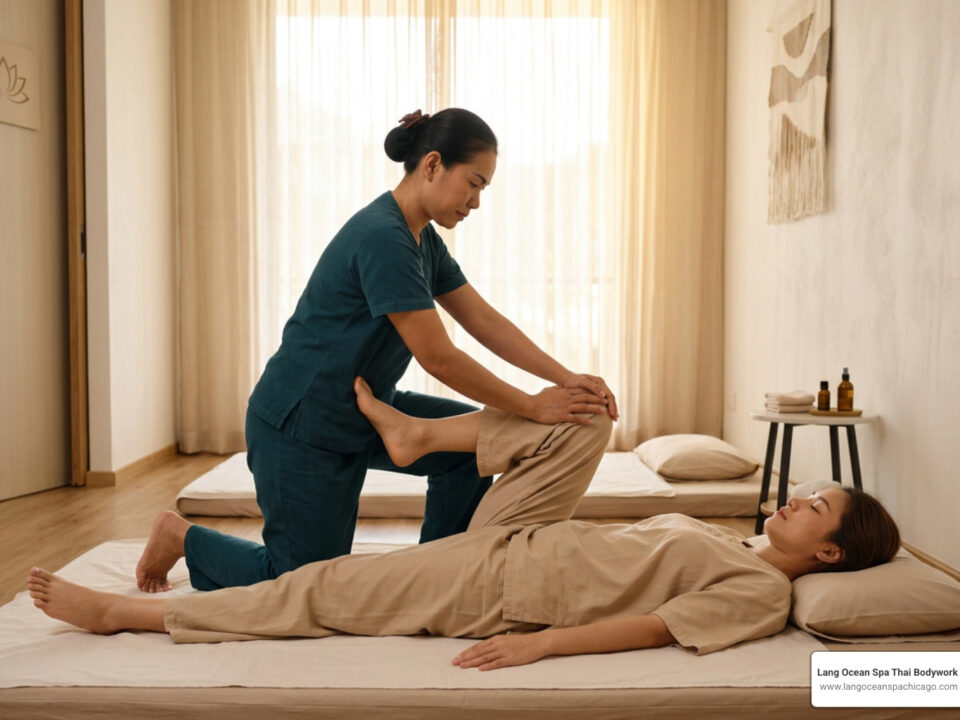
Often called “lazy man’s yoga,” assisted stretching is the hallmark of Thai massage. Your therapist will gently guide your body into deep yoga-like poses, using their own body weight to stabilize you while pulling or pushing to deepen the stretch.
Simultaneously, they apply precise acupressure along your energy lines. This combination of stretching and targeted pressure helps to:
- Align your posture and skeletal structure
- Decompress tight joints (especially in the hips and lower back)
- Stimulate healthy blood circulation and lymphatic drainage
- Deeply calm the nervous system
Ashiatsu Body Walking and Tok Sen Therapy
For clients who require deeper pressure, a highly skilled therapist may utilize advanced techniques like Ashiatsu (body walking) or Tok Sen.
During Ashiatsu, the therapist utilizes overhead bars or support straps to balance themselves while using their feet to apply broad, deep, and incredibly soothing compression along your back and thighs.
Tok Sen is an ancient northern Thai technique that translates to “tapping the energy lines.” The therapist uses specialized wooden tools—a small wooden mallet and peg—to tap rhythmically along your body’s energy pathways. The gentle vibrations travel deep into the muscle layers, releasing stubborn tension that hands alone sometimes cannot reach.
Herbal Compress Therapy and Mitigating Risks
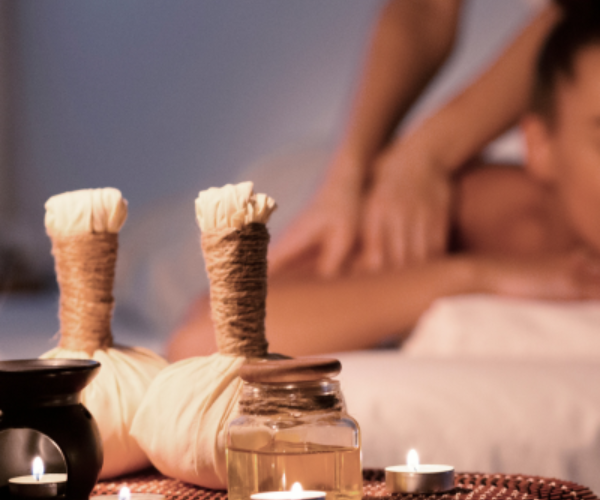
Another signature technique is Luk Pra Kob, or Thai Herbal Compress therapy. This practice involves steaming a muslin bundle filled with aromatic, healing herbs (such as lemongrass, ginger, turmeric, and kaffir lime) and pressing it firmly along your muscles. The heat dilates blood vessels, while the herbal oils soothe inflammation.
While these techniques are highly beneficial, they do carry risks if performed by an untrained individual. Deep stretching and intense pressure can strain muscles or irritate joints if your body’s limits are ignored. A highly experienced therapist knows how to assess your flexibility, identify contraindications (such as osteoporosis, herniated discs, or cardiovascular issues), and modify their techniques to keep your session perfectly safe.
How a Thai Massage Experienced Masseuse Customizes Your Session
One size does not fit all in bodywork. A novice therapist might stick to a rigid, memorized sequence of moves, regardless of your physical state. In contrast, an experienced therapist reads your body’s subtle cues and tailors the session specifically for you. You can learn more about our philosophy of personalized care on our About page.
Tailoring for Chronic Pain and Flexibility
If you suffer from chronic lower back pain, neck stiffness from desk work, or general tight joints, your therapist will adjust the session to focus on those areas.
Instead of forcing your body into extreme stretches, they will start with gentle joint mobilization and warm up the surrounding tissues with broad compression. As your muscles begin to relax, they will gradually increase the depth of the stretches, helping you safely regain your flexibility and range of motion.
Adapting for Stress Relief and Prenatal Care
If your primary goal is stress relief, the therapist will shift the focus toward slow, rhythmic breathing, gentle compression, and soothing Sen line work to trigger your body’s parasympathetic “rest and digest” mode.
For expectant mothers, specialized prenatal Thai massage is available. An experienced therapist knows exactly how to position you safely (typically in a side-lying position supported by pillows) and which acupressure points to strictly avoid to ensure a deeply relaxing, completely safe experience for both mother and baby.
Preparing for Your Session and Booking a Worry-Free Experience
To get the absolute most out of your session, a little preparation goes a long way. Understanding what to expect helps remove any anxiety, allowing you to sink into a state of deep relaxation. You can view our transparent rates and session lengths on our Pricing page.
What to Expect and How to Communicate
Because traditional Thai massage involves active movement and stretching, you should wear loose, comfortable clothing. Think yoga pants, sweatpants, and a loose-fitting t-shirt. Avoid tight jeans or restrictive athletic wear.
During the session, communication is your most valuable tool. Never hesitate to speak up about:
- Pressure Levels: If a stretch feels too intense or the pressure is too deep, let your therapist know immediately.
- Temperature: Let them know if you are too warm or too cold.
- Injuries: Always disclose any recent injuries, surgeries, or chronic health conditions before your session begins.
Most traditional Thai sessions run from 60 to 120 minutes. If you are dealing with chronic pain or want a truly immersive experience, we highly recommend booking a 90-minute or 120-minute session to allow your therapist ample time to work through your entire body without rushing.
Pricing, Tipping, and Booking Policies
To ensure a completely worry-free experience, it helps to understand standard studio policies.
Many high-end boutique studios recommend prepaying by credit card or Zelle when booking online to streamline your arrival and departure. If you are planning a couples session, it is best to book at least 3 hours in advance to secure side-by-side rooms with our top-tier therapists.
When it comes to tipping, a gratuity of 15% to 20% of the standard session price is customary to show appreciation for your therapist’s hard work and physical dedication. To secure your preferred time slot, you can easily access our Schedule and Book Now portal online.
Comparing Thai Massage Studios Across Major U.S. Cities
The standards, pricing, and overall client experience of Thai massage can vary quite a bit depending on where you are in the country. Let’s take a look at how different major metropolitan areas compare.
West Coast and Southern Standards: Beverly Hills, Sacramento, and San Antonio
On the West Coast, cities like Beverly Hills offer ultra-luxury experiences, but they come with a premium price tag (often ranging from $198 for a standard 60-minute session to upwards of $294 for a 90-minute session). In Sacramento, studios lean heavily into specialized healing arts and clinical pain management, incorporating advanced tools like herbal compresses.
Down south in San San Antonio, you’ll find highly rated local spas offering resort-level comfort and an extensive menu of fusion treatments, blending traditional Thai with Western Swedish or deep tissue techniques.
Midwest and East Coast Hubs: Chicago, Houston, and Atlanta
In Atlanta, you can find highly affordable, authentic options, often starting around $90 for a 60-minute floor session on Buford Highway. Houston boasts a vibrant wellness scene with highly rated, minority-owned spas that specialize in traditional floor-based techniques and back-walking.
Here in Chicago, we pride ourselves on offering the perfect balance. The city’s top-rated authentic studios—especially in neighborhoods like River North, Lincoln Park, and Streeterville—focus on delivering premium, highly therapeutic bodywork at accessible, local-friendly prices. If you want to see how local studios rank, you can check out the TOP 10 BEST Thai Massage in Chicago, IL – Updated 2026 – Yelp list to read real client experiences.
Frequently Asked Questions about Thai Massage
What should I wear to a traditional Thai massage?
You should wear loose-fitting, comfortable clothing that allows for a full range of motion. Think of what you would wear to a yoga class or a lazy Sunday on the couch: loose t-shirts, sweatpants, or harem pants. Most studios will also provide clean, comfortable cotton pajamas for you to change into if needed.
Is Thai massage painful for beginners?
It shouldn’t be! While Thai massage involves deep stretching and firm pressure, it should never cause sharp or agonizing pain. An experienced therapist will check in with you regularly to adjust their pressure. If a stretch feels too intense, simply tell your therapist “softer please,” and they will happily adjust.
How often should I get a Thai massage?
For general stress relief and flexibility maintenance, once or twice a month is ideal. If you are using Thai massage to manage chronic pain, recover from an injury, or improve athletic performance, you may want to book weekly sessions initially, gradually spacing them out as your body begins to heal and open up.
Conclusion
Finding a truly skilled, thai massage experienced masseuse is the ultimate key to unlocking the deep physical and mental benefits of this ancient healing art. By checking for proper licensing, looking for specialized Thai certifications, and reading verified client reviews, you can book your next session with absolute peace of mind.
At Lang Ocean Spa Thai Bodywork, we are proud to serve the Chicago community across River North, Lincoln Park, and Streeterville. Our dedicated team is committed to delivering authentic, deeply therapeutic Thai bodywork designed to help you move better, sleep better, and live pain-free.
Ready to experience the difference that true expertise makes? Book your next session with our services today, or call or text us for same-day availability!