What Is Thai Massage Mat Therapy?
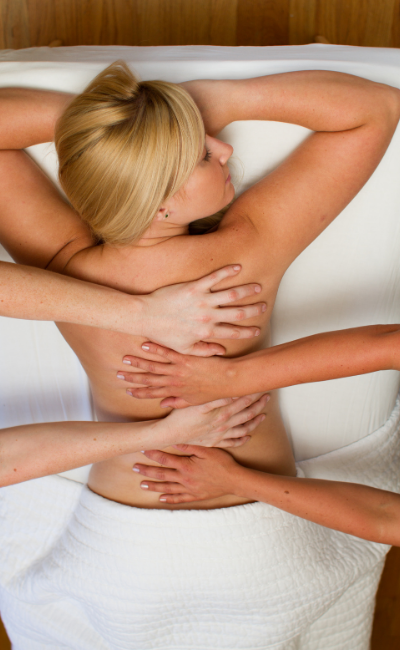
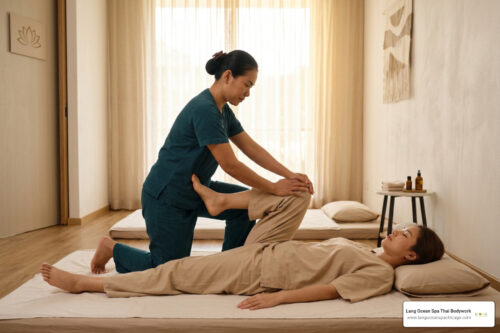
Thai massage mat therapy is a floor-based form of bodywork performed on a firm, padded mat rather than a raised massage table. It gives the practitioner room to use gentle pressure, assisted stretches, and body-weight leverage while helping the client stay supported through positions such as lying on the back, stomach, or side.
For busy professionals dealing with stress and muscle tightness, this setup can make full-body movement and relaxation feel more natural than a narrow table or thin yoga mat. A proper Thai massage mat is wider, firmer, and more cushioned than a yoga mat, yet low enough to the floor to support steady therapist movement.
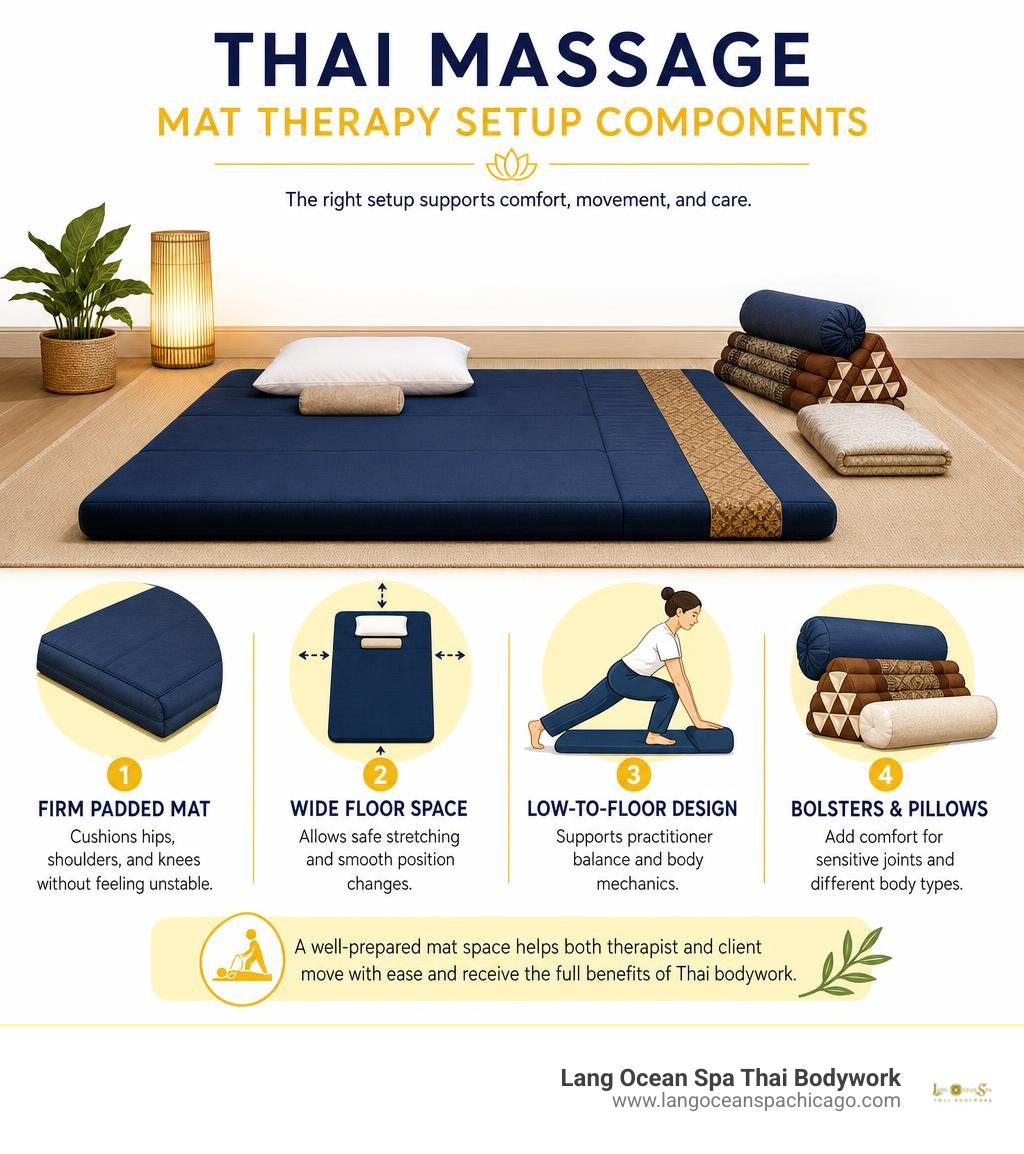
| Setup element | Why it matters |
|---|---|
| Firm padded mat | Cushions hips, shoulders, and knees without feeling unstable |
| Wide floor space | Allows safe stretching and smooth position changes |
| Low-to-floor design | Supports practitioner balance and body mechanics |
| Bolsters and pillows | Add comfort for sensitive joints and different body types |
I am June Liu, founder of Lang Ocean Spa Thai Bodywork in Chicago, and I have provided authentic Thai bodywork since 2016. In the sections ahead, I will explain how Thai massage mat therapy works and why the right floor setup matters for comfort, movement, and care.
Terms related to thai massage mat therapy:
Why Floor Work Matters: Mat Therapy vs. Massage Tables and Yoga Mats
When people picture massage therapy, they usually imagine lying prone on a high, vinyl-padded table while a practitioner works from a standing position. While that arrangement works wonderfully for oil-based Swedish or deep tissue treatments, traditional Thai bodywork operates under an entirely different dynamic.
Performing bodywork on the floor shifts the physics of the session. On a mat, therapists do not rely solely on upper-body muscular effort to apply pressure or initiate movement. Instead, working close to the floor lets us tap into gravity, lean our body weight, and use our hips, knees, and feet to apply smooth, broad compression. This rhythmic grounding gives clients a deeply stabilizing experience while allowing for extensive limb mobility. To explore how these traditional techniques melt away tension, read our guide on How Thai Massage Can Help You to Unwind.
Understanding the Foundation of Thai Massage Mat Therapy
The true foundation of thai massage mat therapy lies in continuous connection and fluid movement. Because Thai bodywork involves passive yoga-like stretches, joint mobilization, and sen line (energy path) compression, both client and therapist frequently change positions throughout a session.
Working on a grounded floor pad gives the practitioner full 360-degree access around your body. We can shift smoothly from a seated stance at your feet to a kneeling posture alongside your spine without breaking flow. The wide padding absorbs localized impact, protecting sensitive joints—like elbows, ankles, and knees—whether they belong to the client receiving the stretch or the therapist administering it.
Comparing Yoga Mats, Tables, and Thai Floor Mats
It is common to wonder why special equipment is required. Why can’t a session take place on a standard exercise sticky mat or a regular table?
Standard massage tables present physical boundary constraints. At roughly 28 to 30 inches wide, a massage table restricts side-to-side leg stretches and arm flaring; if a client spreads their arms out, they risk falling over the edge. Tables also force the practitioner to stand overhead, limiting leverage.
Yoga mats, on the other hand, are designed for standing or kneeling exercises by a single person. At a mere 1/8 to 1/4 inch thick, a yoga mat provides virtually zero joint shock absorption when a therapist kneels beside you or applies firm hip compressions. Kneeling on wood or tile through a thin yoga mat leads to instant discomfort.
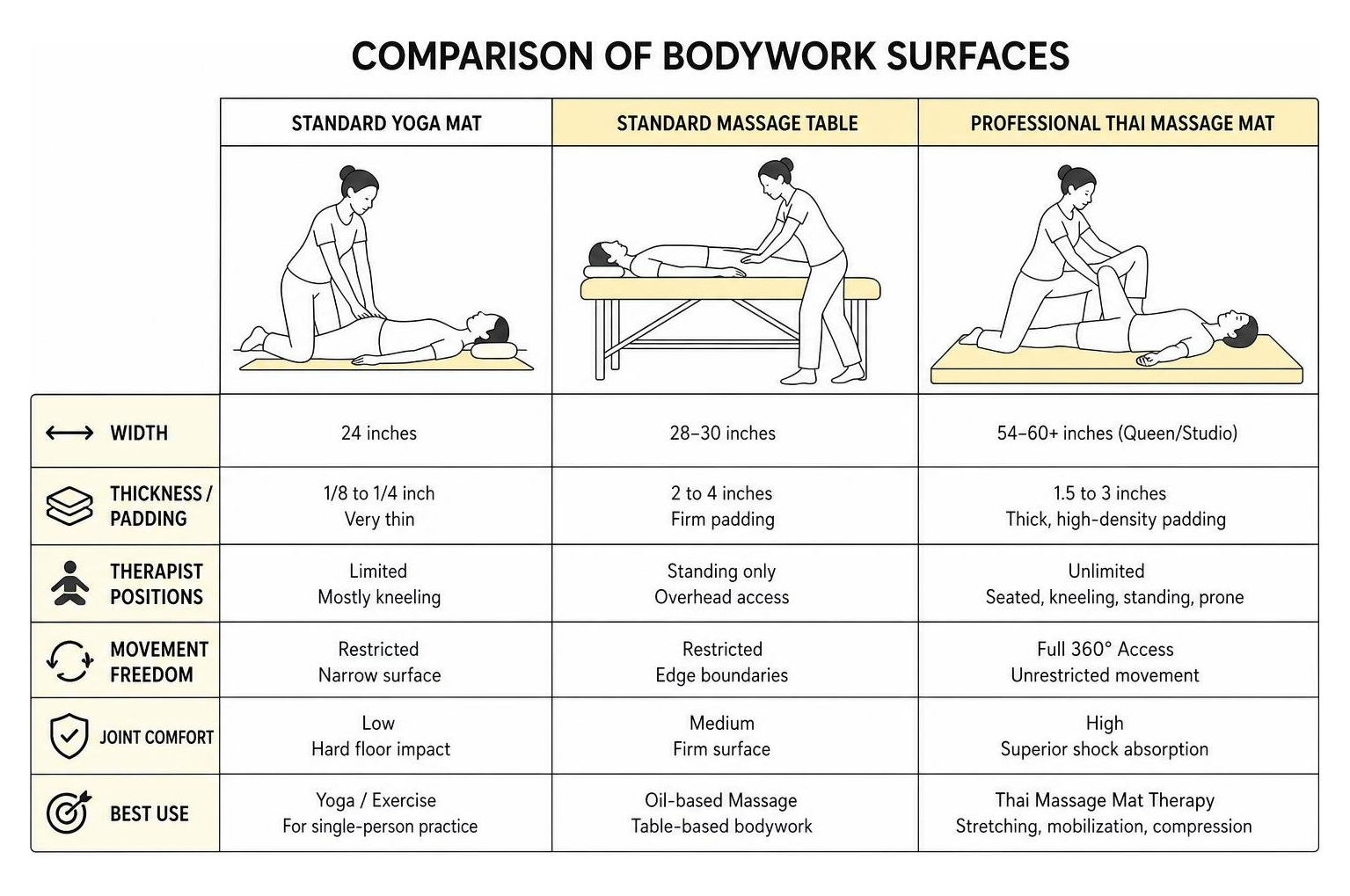
The matrix below highlights how dedicated floor bodywork mats compare to alternative equipment:
| Specification / Feature | Standard Yoga Mat | Standard Massage Table | Professional Thai Massage Mat |
|---|---|---|---|
| Width | 24 inches | 28–30 inches | 54–60+ inches (Queen/Studio) |
| Thickness | 0.125–0.25 inches | 2–3 inches ( elevated ) | 1.5–3 inches ( floor level ) |
| Therapist Leverage | Poor (hard floor beneath) | Moderate (upper body only) | Excellent (full body weight & gravity) |
| Limb Stretching Room | Extremely limited | Restricted by table edges | Spacious 360-degree range |
| Joint Protection | Minimal | High (for client only) | High (for both client and therapist) |
Key Criteria for Selecting the Best Thai Massage Mat
Whether setting up a dedicated wellness studio or curating a home practice space, choosing the right floor mat requires balancing several factors: spatial dimensions, height step-up, cushion density, and material composition.
Optimal Size and Thickness for Therapist Mechanics in Thai Massage Mat Therapy
In thai massage mat therapy, mat dimensions directly influence therapist ergonomics and the overall flow of the session. If a mat is too small, the practitioner is constantly stepping on and off the padded edge onto the hard floor, which interrupts momentum and causes awkward tripping hazards.
- Mat Width and Length: For full studio freedom, a queen-size mat measuring 80 inches long by 60 inches wide offers ideal proportions. A width of at least 54 inches (standard) to 66 inches (studio size) permits a client to spread their arms comfortably during chest-opening stretches while giving the therapist ample room to sit or kneel alongside them. Traditional roll-up models, such as a Roll-up Thai Mattress | cushion | black claret | elephant pattern, often utilize a 105 cm (approx. 41 inches) width as a baseline for compact practitioner maneuvering.
- Mat Thickness & Step-Up Height: Thickness typically ranges between 1 and 3 inches. A mat that is 3 inches thick offers maximum joint cushioning over hard subfloors. However, a thinner mat—around 1 to 2 inches—minimizes the “step-up height” discrepancy between the bare floor and the mat edge, making balance transitions smoother for standing postures.
Mat Fill Options: Cotton, Kapok, Natural Latex, and Poly Foam
The internal structure of a mat dictates how weight is distributed during bodywork sessions. Here is how the primary core materials stack up:
1. Cotton Batting
Traditional futon-style mats utilize layered cotton batting. Cotton provides a dense, firm padding that resists heavy compression.
- Pros: Very stable; therapist knees do not sink to the floor; natural and breathable. Products like a Foldable Thai Massage Mat – Cotton Batting Filled – Made in USA – Massage King or a standard Shiatsu Thai Reiki Massage Mat – 100% Cotton, 54″ x 80″ – Made in USA offer dependable structural support.
- Cons: Heavy (a 3-inch 80″ x 60″ cotton mat weighs roughly 33 pounds), making transport cumbersome.
2. Natural Kapok
Kapok is a organic, silky tree-fruit fiber traditional to Southeast Asia.
- Pros: Naturally hypoallergenic, mold-resistant, insect-resistant, lightweight, and thermoregulating (cool in warm weather, cozy in cool weather).
- Cons: Can flatten over extended years of commercial pressuring; requires periodic sun-baths so the natural fibers re-fluff and regain volume.
3. Natural Latex (Dunlop Process)
Derived from rubber tree sap, 100% natural Dunlop latex toppers create high-performance bodywork surfaces.
- Pros: Exceptionally durable (can last over 10 years when covered); offers resilient push-back support without sagging under local knee pressure. Proteins causing latex allergies are washed out during natural Dunlop processing.
- Cons: Heavier and more expensive than synthetic foams; must be kept covered away from direct UV sunlight to prevent surface oxidation.
4. High-Density Polyurethane Foam
Synthetic poly foam is a common modern substitute.
- Pros: Exceptionally lightweight. A 2-inch poly foam queen mat weighs roughly 17 pounds—nearly half the weight of an equivalent 33-pound cotton mat—making it a favorite for traveling bodyworkers.
- Cons: Can off-gas chemical odors when new; tends to break down faster under heavy daily point pressure than latex or cotton.
Eco-Friendly and Non-Toxic Materials vs. Conventional Options
In floor bodywork, the client’s face rests close to the mat surface for extended periods during prone massage routines. This makes air purity and non-toxic materials a key priority.
Conventional synthetic foam pads can off-gas volatile organic compounds (VOCs) that irritate sensitive breathing passages. Opting for non-toxic setups—such as GOTS-certified organic cotton batting, 100% natural latex toppers, or kapok-stuffed roll-ups wrapped in unbleached cotton canvas—ensures a clean, odor-free environment. Reliable options like the Shiatsu Thai Massage Mat – Thai Yoga Floor Mattress – Bean Products emphasize natural, untreated cotton components that safeguard client health.
Practical Application of Thai Massage Mat Therapy in Practice
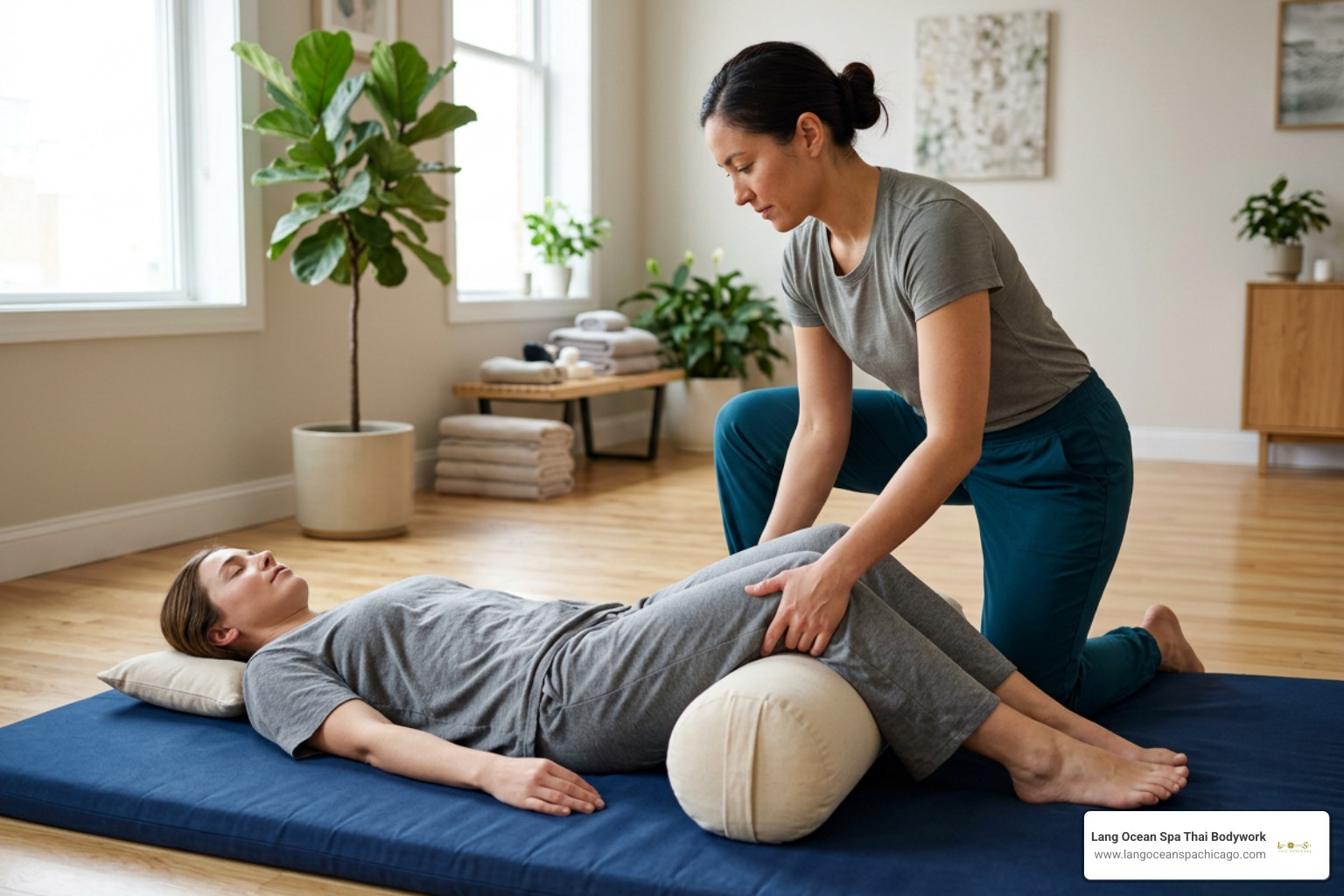
Creating a comfortable, effective floor massage setup goes beyond simply placing a mat on the floor. Proper bolster placement, client positioning, and studio workflow turn basic floor padding into a relaxing, restorative sanctuary.
When you receive a session from a skilled practitioner, prop placement is adjusted continuously. Bolsters placed beneath the knees take pressure off the lower back during back-lying work, while small contour pillows support the neck during lateral side-lying stretches. To learn more about identifying high standards of practice and expert training, review our guide on Thai Massage 101: Spotting a Highly Experienced Masseuse Before You Book.
Studio vs. Outcall Setups: Stationary and Portable Options
Massage setups generally fall into two categories depending on operational needs:
- Stationary Studio Setups: Built for daily client traffic, permanent studio setups prioritize deep cushioning and durability. They often combine a 3-inch dense cotton or 2-inch Dunlop latex base mat, wrapped in a heavy-duty washable canvas casing. Studio-size dimensions (66″ x 80″ or 60″ x 80″) stay permanently laid out over non-slip rug pads.
- Mobile / Outcall Setups: Mobile therapists need equipment that balances comfort with lightweight portability. Poly-foam core mats (around 17 lbs) or lightweight tri-fold mats ($50 to $75 range) fit into carrying bags equipped with shoulder straps and quick-release roll-up ties. A multi-functional option like the Yoga Direct Thai Yoga Massage Mat provides portable floor cushioning for mobile sessions or floor yoga practice.
Maintenance, Cleaning, and Care Protocols
Maintaining hygiene standards on floor equipment is straightforward when proper procedures are followed:
- Protective Outer Covers: Never perform bodywork directly on bare raw batting or latex. Always enclose internal cores in removable, machine-washable zippered canvas covers or fitted cotton sheets.
- Laundering Protocols: Machine-wash outer covers in cool or warm water using mild, scent-free detergents, then tumble dry low or line dry to prevent shrinkage.
- Core Sanitation: Never submerge or machine-wash internal cotton batting or kapok cores—doing so causes the fibers to bunch into permanent lumps. Instead, spot-clean outer ticking with a damp cloth and warm water.
- Air and Sun Treatment: Natural kapok and cotton benefit immensely from periodic sunlight exposure. Setting natural fiber mats outdoors in warm sunlight for two hours dissipates moisture, naturally sanitizes organic fibers, and helps kapok regain its natural fluffiness.
Pricing Ranges and Features That Justify Investment
Investing in quality floor bodywork equipment ranges from economical portable setups to premium organic studio installations. Understanding price structures helps practitioners and enthusiasts choose features that match their budget and usage needs.
- Budget & Mobile tier ($50 – $150): Includes tri-fold gym pads, basic synthetic roll-up cushions, or entry-level cotton mats. Ideal for student practice or occasional outcall work.
- Mid-Range Professional tier ($150 – $350): Covers high-density poly foam outcall mats and standard natural latex toppers ($150–$200 range), as well as classic kapok roll-up mattresses. These balance durability with solid body support.
- Premium & Organic Studio tier ($350 – $750+): Encompasses handcrafted 3-inch futon mats filled with GOTS-certified organic cotton, heavy-duty double-stitched canvas covers, and complete prop bundles. Models such as the Thai Massage Mat | Removable Cover | Sage Meditation represent durable, commercial-grade investments designed to withstand years of daily studio appointments.
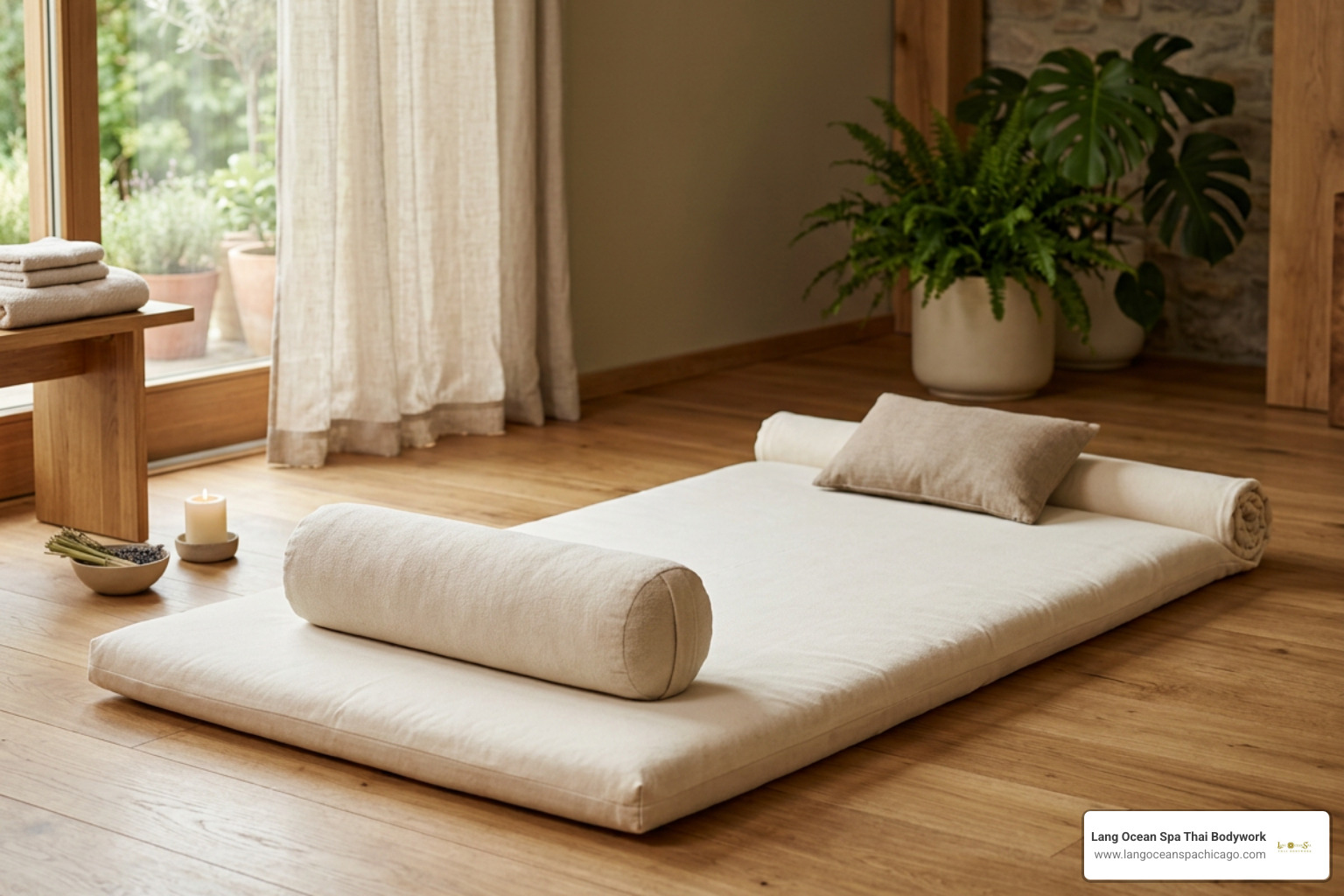
Features that justify higher investment costs include:
- Organic Certifications: Raw, untreated materials free of chemical dyes and flame retardants protect clients who are sensitive to off-gassing.
- Reinforced Stitching: Double-stitched seams and box-tack corners prevent roll-up ties and handles from tearing during transport.
- Commercial-Grade Zippered Casing: Heavy-gauge metal zippers ensure outer canvas covers can undergo hundreds of wash cycles without failing.
To review our complete service options and transparent rates for authentic floor sessions, explore our Pricing page.
Frequently Asked Questions About Thai Massage Mat Therapy
What mat thickness is best for Thai floor massage?
A thickness between 1.5 inches and 3 inches is ideal. A 3-inch thick cotton or latex mat provides deep joint support for clients lying down over hard hardwood or tile floors. However, if a mat is too soft or overly thick (beyond 4 inches), therapist knees may sink down awkwardly, causing joint imbalance during standing or kneeling techniques.
Can a yoga mat be used for Thai massage therapy?
No, standard yoga mats are not suitable for full-body thai massage mat therapy. At only 1/8 to 1/4 inch thick, yoga mats lack the shock-absorbing cushion required to protect a client’s hips and ankles during deep compression. Furthermore, standard yoga mats are far too narrow (usually 24 inches wide), leaving no room for side stretches or for the therapist to sit comfortably alongside the client.
How do you sanitize and care for a floor massage mat between clients?
Between sessions, the outer fitted cover or protective sheet is removed and laundered in hot water with disinfectant detergent. If using a vinyl or water-resistant protective barrier underneath the fabric sheet, it can be wiped down with hospital-grade disinfectant sprays or non-toxic sanitizing wipes. Internal natural cores should be kept dry, spot-cleaned as needed, and regularly aired out.
Conclusion
Thai massage mat therapy offers a grounded, spacious approach to bodywork that traditional raised massage tables simply cannot match. By bringing treatments down to floor level, therapists gain the leverage needed to deliver effective, fluid stretches, while clients enjoy a supportive surface that allows their body to relax completely.
Whether you are seeking relief from everyday desk fatigue, looking to improve joint flexibility, or simply wanting to experience authentic floor bodywork, the foundation of a great session starts on the mat. At Lang Ocean Spa Thai Bodywork in Chicago, our experienced practitioners use authentic floor setups to create customized, relaxing sessions tailored to your needs.
Ready to experience the grounding benefits of traditional floor bodywork firsthand? Discover authentic floor bodywork services and reserve your session with us today.